
Category: Pharmacy Benefits
Building the Integrative Health Partnership Network for Workforce Resilience

Part 5: Building the Integrative Health Partnership Network. Selecting and Aligning Partners for Sustainable Workforce Resilience
March 26, 2026
By Humaculture, Inc.
This is the fifth and final article in our 5-part companion series to ICSL’s analysis of post-COVID health trends and morbidity pressures. In Part 1 we examined the broad crisis of rising chronic conditions driving costs. In Part 2 we applied the Topological Model to variable-demand operations like trucking. In Part 3 we explored chronic surges across large workforces using real employer data. In Part 4 we showed why pharmacology alone falls short and how integrative soil cultivation creates lasting resilience. Here we turn to the final step: how you build a holistic, integrative health partnership network in which every vendor and every program focuses first on integrative health for workforce resilience — addressing the underlying root causes that led someone to need treatment in the first place, rather than simply treating symptoms with pharmaceuticals or surgery.
While ICSL’s ForwardLiving Integrative Platform (FLIP) focuses on creating a platform of vetted integrative health providers, Humaculture® offers the Organizational framework for selecting and aligning all partners across your entire benefits ecosystem towards integrative health. You refine “soil” (Structure, Assets, Processes—the Organization Domain) so the complete network of vendors, insurers, and internal programs works in harmony to support natural, sustainable resilience and Created Value.
As a leader responsible for benefits strategy, risk management, or workforce health, you have now seen the full picture. You have seen the persistent cost pressures and claim surges. You have seen the real impact on employers through rising disability, lost workdays, and productivity challenges. You have seen that even promising tools like GLP-1 drugs provide only short-term relief because the underlying drivers remain unaddressed.
The question is no longer whether action is needed. The question is how you build a complete network of partners that consistently delivers integrative-first results. Just as an unhealthy plant produces little to no fruit, an employee with poor Well-being produces little to no Created Value. In horticulture, fertilizer and pesticides may help to some degree, but there are always unintended consequences and the nutrient density is diminished. The same is true with the quality and extent of the Created Value.
The Limitation of Fragmented or Misaligned Partnerships
Many organizations still select partners in silos. One vendor handles pharmacy benefits while another manages wellness and a third oversees disability programs. Each partner may have good intentions, yet when the primary goal becomes adherence to prescription protocols rather than root-cause health improvement, the entire system remains misaligned. The result is fragmented programs, duplicated costs, app fatigue, and persistent reliance on short-term fixes that fail the moment the inputs stop.
Frustration builds as costs continue to climb and workforce resilience stays fragile. The underlying health of the Organization, like the underlying health of the soil, was never truly built.
The Humaculture® Topological Model: A Practical Guide for Integrative Health Partnership Selection
The Humaculture® Topological Model gives you a clear framework for this final step. It shows exactly where to refine the Organizational “soil” so the entire network of partners supports natural, sustainable resilience.
| Domain | Challenges (Current State) | Success (Integrative Outcome) |
|---|---|---|
| Environment Domain | Rigid regulations, high drug costs, limited access to preventive care | Strong partnerships with vendors that prioritize integrative protocols and flexible plan designs |
| Organization Domain | Fragmented benefits programs, misaligned vendors, pharmacology-first defaults | Clear standards across all health, wellness, leave, disability, and workers’ compensation programs; every partner adopts integrative-first protocols (Food as Medicine, Exercise as Medicine); misaligned vendors are replaced |
| People Domain | Unaddressed personal distractions and low intrinsic motivation | Empowered, accountable Talent inclined toward health, with the tools and autonomy to perform at their best |
When you intentionally orchestrate the Topology between these Domains through the Dynamic Matrix, the entire partnership network becomes self-reinforcing. Resilient People produce sustainable Created Value cycle after cycle.
The Decisive Choice: Build the Integrative Health Partnership Network
The turning point comes when you choose intentional, integrative cultivation over pharmacology-first fixes. Instead of another drug-centric incentive or coverage expansion, you reallocate Assets toward merit-based Processes designed to attract and retain empowered Talent already inclined toward health. You establish clear standards and expectations across all health, wellness, leave, disability, and workers’ compensation programs and require every solution provider partner to adopt integrative-first protocols (Food as Medicine, Exercise as Medicine), ensuring full alignment and replacing any misaligned vendors that prioritize pharmacology-only approaches.
This is how you move from fragmented programs to a true integrative health partnership network. Every vendor, every program, and every internal process works in harmony to support root-cause health rather than symptom management.
Anonymized client data shows this works. Organizations that applied these standards saw recurring claims and utilization decline meaningfully. Organizations that continued with misaligned, pharmacology-focused partners saw recurring claims, program dropout, and sustained high costs because the underlying drivers of poor health were never addressed, creating a cycle of prescription dependency.
Resolution: Measurable Victory and Renewed Operations
Organizations that consistently feed the Organizational “soil” and align every partner around integrative-first principles achieve balanced, lasting success. The resolution is measurable victory: higher People Health Quotient (PHQ) and Organization Healthful Quotient (OHQ), meaningful reductions in disability costs and absenteeism, stronger retention and engagement, substantially multiplied Created Value, and a renewed operation ready for the next cycle. Just as organic gardening produces fruit with significantly higher nutrient density, integrative “soil” cultivation (Organization Domain refinement) yields resilient People who deliver superior, sustainable outcomes.
For leaders ready to build this network, the results include:
- Economic. Strong multi-dollar returns on investment. Meaningful reductions in medical spending, disability costs, and indirect disruptions. Easier recruiting of ideal Talent. Reduced turnover. Fewer recurring claims. Recovered productivity that directly protects financial stability.
- Effectual. Tangible risk reduction. Lower chronic disease progression. Decreased utilization severity. Faster recovery from health events. Measurable declines in the key post-COVID morbidity drivers.
- Emotional. Authentic resonance through merit-based recognition, constructive challenge, and mission alignment. This builds voluntary engagement and retention rather than dependency or resentment.
The outcome is multiplied Created Value. Higher retention, more productive teams, more stable operations, reduced absenteeism and disruptions — the organization becomes self-reinforcing. Resilient People produce sustainable fruit cycle after cycle.
Take the First Step
As a starting point, contact Humaculture® for a review of your medical, disability, workers’ compensation, and absenteeism data, mapped to the Dynamic Matrix. We’ll identify leverage points to cultivate resilience and Created Value in your unique terrain and help you evaluate and align every partner in your network.
Read the companion ICSL article for the full view of the ForwardLiving Integrative Partnership (FLIP). Join us in building organizations where every partner, every program, and every process works together so People don’t just manage chronic risk. They flourish despite it.
Contact: Steve Cyboran at Steve.Cyboran@Humaculture.com, Wes Rogers at Wes.Rogers@Humaculture.com, or Caroline Cyboran at caroline.cyboran@humaculture.com
Website: humaculture.com
LinkedIn: humaculture-inc
Humaculture® — Cultivate Organizations, Grow People.
Beyond Pharmacology Alone: Integrative Soil Cultivation for Workforce Resilience
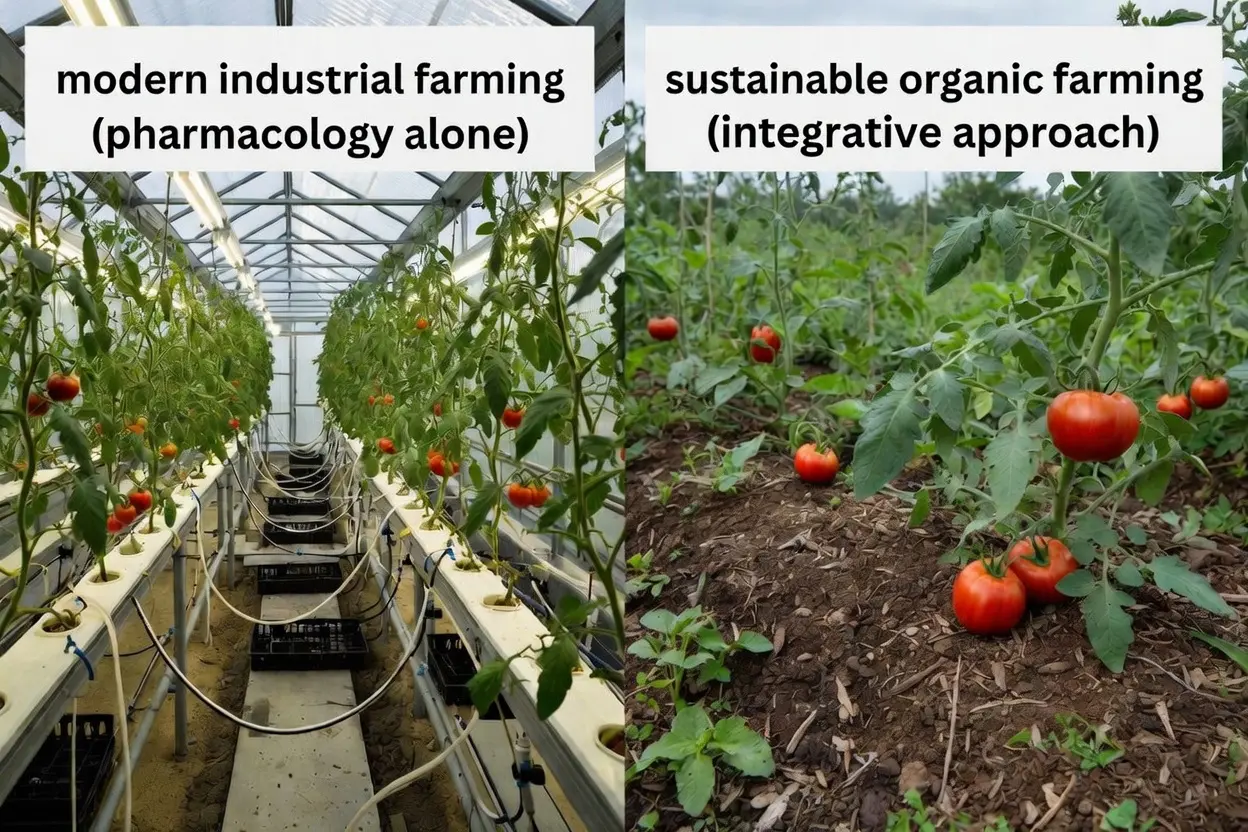
Above image: Modern industrial farming (pharmacology alone) can produce short-term results, but only as long as the constant chemical inputs continue. Stop the inputs and the plants quickly decline, because the underlying soil health was never built. Sustainable organic farming (integrative approach) cultivates rich, living soil that sustains healthy, nutrient-dense fruit even without constant intervention.
Part 4: Beyond Pharmacology Alone. Integrative Soil Cultivation for Lasting Chronic Condition Mitigation
February 20, 2026
By Humaculture, Inc.
This is the fourth in a 5-part companion series to ICSL’s analysis of post-COVID health trends and morbidity pressures.
- In Part 1, we examined the broad crisis of rising chronic conditions driving costs.
- In Part 2, we applied the Topological Model to variable-demand operations like trucking.
- In Part 3, we explored chronic surges across large workforces using actual employer data.
- Here, we build on these insights to examine why pharmacology alone falls short, and how an integrative Humaculture® Topological approach (“soil cultivation”) offers a sustainable, organic path forward.
While ICSL’s companion article, “Why GLP-1 Drugs Alone Aren’t Enough – The Case for Integrative Solutions,” highlights the limitations of a pharmacology-first mindset, Humaculture® focuses on the Organizational solution. We refine “soil” (Structure, Assets, Processes—the Organization Domain) to enable natural, lasting resilience and Created Value.
As a leader in health benefits, risk management, or workforce wellness, you’ve seen the promise of GLP-1 drugs. Impressive short-term weight loss. Better blood sugar control. Reduced cardiometabolic risks. Many hoped these medications would finally bend the curve on chronic disease burdens that drive medical claims, disability costs, and absence.
Yet the limitations have become clear: high dropout rates, substantial weight regain upon discontinuation, muscle loss, side effects, and access barriers. These issues persist because pharmacology-first approaches treat symptoms without addressing the root causes. The underlying causes (poor nutrition, sedentary lifestyle, and behavioral patterns), remain unaddressed.
The Limitation of Forcing the “Plant” with Pharmacology Alone
Many people instinctively reach for the newest pharmaceutical tool. They force the “plant” (People) toward outcomes despite depleted conditions. A pharmacology-first mindset is like painting over a mildewed wall. The problem is hidden in the short-term, but reappears quickly because the root cause was only masked. Unintended consequences emerge and natural defenses weaken over time.
GLP-1 drugs deliver impressive short-term results (Diabetes, Obesity and Metabolism 2022), but studies show discontinuation leads to rapid regain, often 50 to 100 percent of lost weight within 12 months (Rubino, JAMA 2022). Dropout rates run high, driven by side effects, cost, and access barriers (Rodriguez, JAMA 2022). Even sustained use carries risks like muscle loss (15 to 40 percent – ScienceInsights, 2025)and long-term risks (Healthhoper 2026).
Weight is just one piece of the puzzle. Elevated weight increases risk for cardiac and circulatory disease, neurological impairment, metabolic and digestive disorders, and many cancers. Yet pharmacology-first thinking treats symptoms rather than first supporting the body’s natural ability to restore health through nutrition, fitness, behavior, and prevention.
Temporary gains fade when the underlying “soil” remains poor. Short-term productivity comes at the price of sustained resilience. This mirrors trends where chronic conditions drive recurring claims, lengthened disability durations, and escalating costs.
Frustration grows as costs climb and workforce health continues to strain the business. You recognize that there must be a better way to manage our health costs. What if a more integrative approach could finally unlock the lasting resilience you’ve been seeking?
The Humaculture® Topological Model: A Practical Guide for Integrative “Cultivation”
The Humaculture® Topological Model gives leaders a clear, practical framework for this shift. It shows exactly where to refine the Organizational “soil” so People can thrive naturally and produce lasting Created Value. Three Domains interact without hierarchy:
| Domain | Challenges (Current State) | Success (Integrative Outcome) |
| Environment Domain | Rigid regulations, high drug costs, limited access to preventive care | Strong partnerships with vendors that prioritize integrative protocols and flexible plan designs |
| Organization Domain | Fragmented benefits programs, misaligned vendors, pharmacology-first defaults | Clear standards across all health, wellness, leave, disability, and workers’ compensation programs; every partner adopts integrative-first protocols (Food as Medicine, Exercise as Medicine); misaligned vendors are replaced |
| People Domain | Unaddressed personal distractions and low intrinsic motivation | Empowered, accountable Talent inclined toward health, with the tools and autonomy to perform at their best |
When leaders intentionally orchestrate these Domains through the Dynamic Matrix, the entire system becomes self-reinforcing. Resilient People produce sustainable Created Value cycle after cycle.
The Decisive Choice: Refine the “Soil” for Integrative Cultivation
Effective workplaces lay the foundation for lasting health and resilience in organizations facing chronic condition pressures. Families and Work Institute defines an effective workplace, and their research demonstrates that an effective workplace yields roughly twice-better health outcomes relative to low-effective workplaces, reducing chronic stress, fatigue-related risks, and claims severity while strengthening retention and engagement.
The turning point comes when the leader chooses intentional, integrative “cultivation” over pharmacology-first fixes. Instead of another drug-centric incentive or coverage expansion, they reallocate Assets toward merit-based Processes designed to attract and retain empowered Talent already inclined toward health. They establish clear standards and expectations across all health, wellness, leave, disability, and workers’ compensation programs and require every solution provider partner to adopt integrative-first protocols (Food as Medicine, Exercise as Medicine), ensuring full alignment and replacing any misaligned vendors that prioritize pharmacology-only approaches. Any vendor whose primary goal is adherence to prescription drug protocols is a clear red flag that they are not focused on improved health and should be replaced to ensure full alignment.
Resolution: Measurable Victory and Renewed Operations
Organizations that consistently feed the Organizational “soil” achieve balanced, lasting success. The resolution is measurable victory: higher People Health Quotient (PHQ) and Organization Healthful Quotient (OHQ), meaningful reductions in disability costs and absenteeism, stronger retention and engagement, substantially multiplied Created Value, and a renewed operation ready for the next cycle. Just as organic gardening produces fruit with significantly higher nutrient density, integrative health solutions is like “soil” cultivation (Organization Domain refinement) that yields resilient People who deliver superior, sustainable outcomes.
For leaders facing chronic condition pressures, the results include:
- Economic. Strong multi-dollar returns on investment. Meaningful reductions in medical and prescription drug spending, disability costs, and indirect disruptions. Easier recruiting of ideal Talent. Reduced turnover. Fewer recurring claims. Recovered productivity that directly protects financial stability.
- Effectual. Tangible risk reduction. Lower chronic disease progression. Decreased utilization severity. Faster recovery from health events. Measurable declines in the key post-COVID morbidity drivers.
- Emotional. Authentic resonance through merit-based recognition, constructive challenge, and mission alignment. This builds voluntary engagement and retention rather than dependency or resentment.
The outcome is multiplied Created Value. Higher retention. More productive teams. More stable operations. Reduced absenteeism and disruptions. The organization becomes self-reinforcing. Resilient People produce sustainable Created Value (“fruit”) cycle after cycle.
Next up, in Part 5, we’ll examine partnering to address chronic risk at scale. Companion to ICSL’s focused analysis.
Take the First Step
As a starting point, contact Humaculture® for a review of your medical, disability, workers’ compensation, and absenteeism data, mapped to the Dynamic Matrix. We’ll identify leverage points to cultivate resilience and Created Value in your unique terrain.
Read the companion ICSL article for the full view of why pharmacology alone isn’t enough. Join us in building organizations where People don’t just manage chronic risk. They flourish despite it.
Contact: Steve Cyboran at Steve.Cyboran@Humaculture.com, Wes Rogers at Wes.Rogers@Humaculture.com, or Caroline Cyboran at caroline.cyboran@humaculture.com
Website: humaculture.com
LinkedIn: humaculture-inc
Humaculture® — Cultivate Organizations, Grow People.
Chronic Condition Surges in the Workforce: Refining “Soil” Resilience

Part 3: Chronic Condition Surges and Workforce Impacts. Refining Organizational “Soil” for Population Resilience
February 5, 2026
By Humaculture, Inc.
This is the third in a 5-part companion series to ICSL’s analysis of post-COVID health trends and morbidity pressures. In Part 1, we examined the broad crisis of rising chronic conditions driving costs across insurance and benefits programs. In Part 2, we applied the Topological Model to variable-demand operations like trucking, where isolation, sedentary work, and limited nutrition access make health risks hit harder. Here, we focus on real employer impacts—drawing from anonymized client data and industry trends to show chronic condition surges in the workforce—and how the Dynamic Matrix helps you diagnose your unique terrain and refine your “soil” for lasting results.
While ICSL’s article, “Real Employer Impacts – Post-COVID Disability and Cost Surges,” illuminates the clinical and industry realities deepening in 2025, Humaculture® offers the organizational framework for sustainable solutions. We refine Organizational “soil” (Structure, Assets, Processes) so People naturally thrive and produce Created Value.
You’ve worked hard to build a strong team, developing competitive benefits, wellness incentives, and support programs. You’ve done the things leaders do to keep people healthy and productive. But lately, something’s different. Chronic condition surges in the workforce are shifting the landscape. Disability claims are up sharply. Medical costs are climbing. Absence is dragging on performance. The pressure is real, and it’s hitting the workforce you’ve helped develop.
When Traditional Approaches Could Only Slow the Surge
You’ve tried the usual tools, such as expanded EAPs, provided more generous return-to-work programs, broader coverage, bigger incentives. They helped: some claims slowed, some people returned faster, but the surge kept going. Recurring issues lengthened overall durations. Underlying health problems didn’t go away. Frustration set in as the team you’ve built started to feel the strain.
A Diagnostic Path Emerges
That’s when curiosity turned toward a different approach. ICSL showed a better way: early identification, nutrition and fitness focus, behavioral support, integrative strategies. By diagnosing the root drivers behind disability and cost surges, ICSL acts like a “soil” test for your garden. It reveals what’s really wrong so you can fix it right.
Industry-wide data confirms the scale. The number of people with disabilities in the U.S. labor force (in thousands) rose sharply after 2020 and has continues to rise (FRED data). This isn’t an isolated problem. It’s widespread and persistent, touching organizations everywhere.
The Humaculture® Topological Model: A Mentor for Diagnosing and Refining Large Workforces
The Humaculture® Topological Model provides a proven framework. Three Domains interact fluidly without hierarchy to foster purposeful Value Creation. The Dynamic Matrix provides profound insights into the connections (topology) between them. It lets you see leverage points and unintended consequences before problems escalate.
The cultivated “soil” is the Organization Domain (Structure, Assets, and Processes) that enables the “plants” (People) to thrive within the broader terrain (Environment).
- Environment Domain. The broader terrain. Rules (benefits regulations, labor laws), Natural Resources (health plan budgets, vendor networks), Community (employees, unions, regulators, potential employees).
- Challenges: Post-COVID morbidity surge, rising claims across large populations, regulatory constraints on incentives.
- Opportunities: Align external conditions with internal resilience through data-driven plan design and vendor partnerships for preventive support.
- Organization Domain. The cultivated “soil”. Structure (flat governance, administrative hierarchies), Assets (financial reserves, technology platforms), Processes (Leadership and Operational).
- Challenges: Recurring claims lengthening durations, administrative delays, inconsistent support for chronic conditions.
- Opportunities: Reliable execution of these Processes creates a well-functioning operation where people rely on consistent support, fair accommodations, and financial stability.
- People Domain. The “plants”. Personal Characteristics (age, gender, height, weight, behavioral heuristics such as empowerment vs. entitlement focus), Skills/Training/Education/Experiences (health literacy, chronic condition self-management), Created Value (productivity, engagement, service delivery).
- Challenges: Sustained chronic utilization, recurring disability, absenteeism from unmanaged conditions.
- Opportunities: Refined “soil” enables people to manage chronic risks without overload, producing resilient, healthy, productive Talent.
The Decisive Choice: Refine the “Soil”
Think of your workforce like a garden of tomatoes. Some “plants” are struggling: wilted leaves, poor yield. Is it missing nutrients? Too much water? Bad drainage? Variable weather? ICSL screenings are the “soil” test, showing exactly what’s off. The Humaculture® Topological Model helps you refine the “soil” based on that diagnosis to attract and retain the right “plants” that will thrive in the improved conditions.
In large workforces facing chronic condition surges, effective workplaces don’t just happen. They require intentional orchestration of the Dynamic Matrix with meaningful challenge through purposeful work, responsive supervisor support, autonomy over aspects of the job, co-worker backing through peer networks, respect for contributions, work-life fit with predictable recovery time, adequate pay, and opportunity for advancement. Research from the Families and Work Institute shows such workplaces yield roughly twice-better health outcomes relative to low-effective workplaces, reducing chronic stress, fatigue-related risks, and claims severity while strengthening retention and engagement.
The turning point is when you decide to refine the “soil” intentionally. Instead of another generic program or incentive tweak, reallocate Assets toward merit-based Processes, embed practical biometric feedback in Performance Nurturing, adjust benefits administration through Resource Allocation, align Cultural Nurturing with mission and independence, and build peer networks and mentorship to foster belonging and support.
Client data shows this works. Integrative health support improved biometric measures and reduced claims and employee costs year-over-year. In another organization, refined Processes reduced unscheduled absence by 60%. These structures activate within Cultural Nurturing and Community Engagement, helping People connect and become resilient despite ongoing pressures.
Brief daily routines with high adherence have been shown to substantially reduce pain levels and support sustained focus and productivity. Deeply integrated workplace resilience programs focused on empowerment, including coaching for lifestyle, fitness, nutrition, and gut/digestive health, deliver strong returns on investment when designed within a broader initiative. A shift in focus toward merit, health, and empowerment can also attract and retain Talent already inclined toward health and productivity. These yield meaningful improvements in chronic disease risk factors, reductions in symptom burden, and corresponding lower medical spending and claims severity, addressing widespread post-COVID morbidity. Embedded support for health-related absences, when part of broader resilience Processes, significantly shortens disability durations tied to chronic conditions, producing high ROI.
HARS™ (Health, Absence, Resilience Support) is a sub-knowledge set within the Topological Model. It specifically addresses, analyzes, and predicts Process improvements to achieve the Three Promises in health, absence, and resilience areas.
Resolution: Measurable Victory and Renewed Operations
Organizations that consistently feed the Organizational “soil” achieve balanced, lasting success. The resolution is measurable victory: higher People Health Quotient (PHQ) and Organization Healthful Quotient (OHQ), meaningful reductions in disability costs and absence, stronger retention and engagement, substantially multiplied Created Value, and a renewed operation ready for the next cycle.
For leaders managing large workforces facing chronic condition surges, the results include:
- Economic. Strong multi-dollar returns on investment. Meaningful reductions in medical spending, disability costs, and indirect disruptions. Easier recruiting of ideal Talent, reduced turnover, fewer recurring claims, and recovered productivity that directly protects financial stability.
- Effectual. Tangible risk reduction, lower chronic disease progression, decreased utilization severity, faster recovery from health events, and measurable declines in the key post-COVID morbidity drivers.
- Emotional. Authentic resonance through merit-based recognition, constructive challenge, and mission alignment. This builds voluntary engagement and retention rather than dependency or resentment.
The outcome is multiplied Created Value, with Higher retention, more productive teams, more stable operations, reduced absenteeism and disruptions. The organization becomes self-reinforcing. Resilient People produce sustainable fruit cycle after cycle.
Next week, in Part 4, we’ll examine why pharmacology alone isn’t enough. Companion to ICSL’s focused analysis.
Take the First Step
As a starting point, contact Humaculture® for a review of your medical, disability, workers’ compensation, and absenteeism data. We’ll identify leverage points to cultivate resilience and Created Value in your unique terrain.
Read the companion ICSL article for the full view of employer impacts: https://www.linkedin.com/pulse/real-employer-impacts-post-covid-disability-9ndme. Join us in building organizations where People don’t just manage chronic risk. They flourish despite it.
Contact: Steve Cyboran at Steve.Cyboran@Humaculture.com, Wes Rogers at Wes.Rogers@Humaculture.com, or Caroline Cyboran at caroline.cyboran@humaculture.com
LinkedIn: humaculture-inc
Humaculture® — Cultivate Organizations, Grow People.
Hidden Opportunities, A Strategic Compliance Series

Hidden Opportunities Overview
In this webinar series we explore ways organizations can go beyond basic compliance and improve their “organizational soil” through a strategic response to the No Surprises Act and the Transparency in Coverage regulations. Our goal is to help organizations create a competitive advantage. Does it make sense to expend limited resources to merely comply with the law and regulations, or is there a way to strategically “design the compliance away” while differentiating the employee value proposition?
For example, a knowledgeable horticulturist may use the high temperatures of the summer season, which are a normal part of the environment just as law and regulation are a normal part of the business environment, to solarize the soil. This is a low cost and simple process of spreading a plastic sheet over an area of soil to trap and intensify the sun’s energy. It is a process that works well to destroy weed seeds and pathogens. Similarly, a knowledgeable Humaculturist® can employ techniques to leverage laws and regulations to strategically improve the organization. This webinar series seeks to identify some of these techniques.
The topics from the series include:
| Hidden Opportunities: No Surprises Act |
| Surpassing Mere Compliance – Including Reference Based Pricing |
| Preserving the Harvest…Leveraging HSAs |
| Hidden Opportunities: Transparency |
| A “Dope” Response to Pharmacy Transparency |
| Mental Health Parity…A Lucid Approach |
| Pest Management, Minimizing Plan Losses through Fee Disclosure |
Available Support
We are available to support you in your strategy, design, compliance, financial, and monitoring needs. Our team includes experts in organization design, actuarial science, clinical, and legal can guide the process to achieve optimal behavior. Please contact us.
Webinar Replay: A “Dope” Response to Pharmacy Transparency

Watch a replay of the third webinar in Humaculture, Inc.’s Hidden Opportunities, Strategic Compliance Series, which focuses on why the new pharmacy transparency law will not increase transparency; will increase costs, administration, and litigation risk; and how to effectively respond.
Presenters
- Steve Cyboran, ASA, MAAA, FCA, CEBS, actuary and strategy consultant
- Wes Rogers, Humaculturist® and strategy consultant
- Jack Towarnicky, LLM, JD, MBA, CEBS, attorney, strategy and compliance consultant
- Scott McKibbin, strategy and pharmacy consultant
Objective
Beyond basic compliance, this series addresses how to strategically leverage the No Surprises Act to create a competitive financial advantage for both the plan sponsor and plan participants. This session focuses on leveraging Acquisition Cost Based Pharmacy Pricing as well as Behavioral Design and Messaging as an example of a strategic action organizations can take to optimize this compliance opportunity.
Pharmacy Transparency Key Takeaways
During this session, participants will learn:
- Transparency is a misnomer – New rules don’t provide transparency
- Pharmacy is likely to continue to be rather “opaque”
- The conundrum – mere compliance will likely increase costs, administration, and litigation risk
- How to use Acquisition Cost Based Pharmacy Pricing as well as Behavioral Design and Messaging as examples of strategic actions to:
- Avoid what can be avoided
- Provide true transparency with pharmacy benefits
- Empower consumers to make better, more clinically appropriate decisions
- Communicate all negatives as the result of compliance
- Inform/educate consumers (before they become patients)
Available Support
We are available to support you in your strategy, design, compliance, financial, and monitoring needs. To that end, our team of consultants, including actuaries, clinicians, behavioral health, pharmacy, and legal resources are available to guide you through the compliance process. Please contact us: info@humaculture.com.
Watch
Watch the Hidden Opportunities: Preserving the Harvest…Leveraging HSAs Webinar Replay below, or via Rumble or YouTube.

Hidden Opportunities, A Strategic Compliance Series: A “Dope” Response to Pharmacy Transparency
You can now access a replay of this webinar here.
Join us on Thursday, March 17 from 12:00 to 12:30 CST for the third webinar in Humaculture, Inc.’s Hidden Opportunities, Strategic Compliance Series, to learn why the new pharmacy transparency law will not increase transparency; will increase costs, administration, and litigation risk; and how to effectively respond.
Presenters
- Steve Cyboran, ASA, MAAA, FCA, CEBS, actuary and strategy consultant
- Wes Rogers, Humaculturist® and strategy consultant
- Jack Towarnicky, LLM, JD, MBA, CEBS, attorney, strategy and compliance consultant
- Scott McKibbin, strategy and pharmacy consultant
Objective
Beyond basic compliance, this series addresses how to strategically leverage the No Surprises Act and Transparency in Coverage to create a competitive advantage for both the employer and employees. In this session we will include a focus on leveraging Acquisition Cost Based Pharmacy Pricing as well as Behavioral Design and Messaging as an example of a strategic action organizations can take to optimize this compliance opportunity.
Pharmacy Transparency Key Takeaways
During this session, participants will learn:
- Transparency is a misnomer – New rules don’t provide transparency
- Pharmacy is likely to continue to be rather “opaque”
- The conundrum – mere compliance will likely increase costs, administration, and litigation risk
- How to use Acquisition Cost Based Pharmacy Pricing as well as Behavioral Design and Messaging as examples of strategic actions to:
- Avoid what can be avoided
- Provide true transparency with pharmacy benefits
- Empower consumers to make better, more clinically appropriate decisions
- Communicate all negatives as the result of compliance
- Inform/educate consumers (before they become patients)


