
Category: Uncategorized
Cultivating Operational Excellence: Applying the Topological Model in High-Impact Facility Launches

As a leader responsible for launching major operational facilities from the ground up, you face tight deadlines, complex stakeholder demands, and the need to produce results quickly. The real leverage does not come from pushing people harder. It comes from redesigning the Processes and Structures in which they work, feeding the organizational “soil” so that People can consistently deliver Created Value.
Scott Villwock provides a clear illustration of this principle in action. A senior operations leader with deep experience across multi-site manufacturing, distribution, and logistics, Scott stepped into two large-scale, ground-up operational roles: the ExxonMobil campus consolidation and a 1.2 million square foot Amazon fulfillment facility. In both cases he was responsible for everything that moved once the buildings were standing, including newspapers, executive relocations, food service, furniture, deliveries, and the thousands of daily transactions that keep a complex site functioning. He also applied the same disciplined approach at other operations.
The difference between struggle and breakthrough came down to how the underlying work was designed and how accountability was built into the system.
When the Building Was Ready, the Work Still Had to Grow
Both the ExxonMobil and Amazon projects demanded rapid integration of diverse teams, legacy processes, and aggressive timelines. Facilities and equipment mattered. So did the design of the work itself.
In another example, Scott was charged with improving an order fulfillment process plagued by a poor on-time delivery rate of just 34%. Orders arrived in a chaotic free-for-all. Multiple people handled different parts of the same order, but no one was responsible for the order from start to finish. Errors and finger-pointing were common because no single person owned an order from start to finish.
The pressure could easily have led to more supervision, more urgency, and more reminders to work faster. Instead, Scott chose to redesign the team’s process.
Scott and the team redesigned the Process. They changed how orders came in, how they were processed, how they were pulled, how they were loaded, and how they were verified. The free-for-all became clear “cradle-to-grave” ownership. One person became responsible for an order from receipt through distribution, pulling, loading, and verification. Combined with transparent weekly KPI posting and open team discussions about what was working, on-time delivery rose from 34% to 97%.
As ownership became clearer, the tone of the work changed. Conversations moved from blame to improvement. Team members could see progress, name obstacles, and take pride in results they helped create. The daily experience of the work itself became more coherent and less exhausting.
The same continuous-improvement mindset, rooted in Lean principles, guided safety and performance work across the ExxonMobil and Amazon sites. Scott applied Lean tools such as the 5 Whys method to uncover root causes and Kaizen to support steady, incremental improvements to Processes. At the ExxonMobil campus, structured safety Processes, consistent walkthroughs, and these Lean practices produced more than 65,000 hours without recordable incidents. At Amazon, he adapted national best practices to local conditions and converted generic training into facility-specific programs that built real capability.
Blending Perspectives and Securing Buy-In
Scott’s approach began with listening. He absorbed what the organization and its people actually needed before applying his operational experience. In rooms full of engineers focused on models, he contributed practical ground-level reality. The result was productive compromise that improved both design and execution.
When organizational structures or role responsibilities needed adjustment, he involved the team. Changes were discussed until the group saw the logic. When people participate in the decision, they develop a sense of ownership because they remember they agreed to it, which makes rollout and accountability far easier.
This is Performance Nurturing and Cultural Nurturing in practice. People gain clear Knowing of what good looks like, Wanting through ownership and visible progress, Ability because the right Processes, tools, and resources remove barriers to execution, and Capacity because job expectations, workload, and organizational design are aligned to support the work as designed.
What Changed When the “Soil” Was Rebuilt
The Humaculture® Topological Model helps leaders see why this approach produced lasting results. Scott did not simply ask People to try harder. By redesigning key Processes, including “cradle-to-grave” order ownership and transparent weekly KPI reviews, and strengthening Structures such as role clarity and shared accountability, then pairing those changes with the right facilities, equipment, and data, he made it possible for People to put the organization’s Assets to work and Create Value. Stronger performance became the natural result rather than a constant act of will.
The work enriched Processes and Structures. It strengthened the conditions that allow People to succeed. The Three Promises followed naturally. Effectual outcomes appeared as measurable jumps in on-time delivery, safety hours, and operational throughput. Emotional outcomes emerged as teams felt ownership, celebrated wins together, and trusted the process because they helped shape it. Economic outcomes showed up in sustainable efficiency and reduced waste that protected margins and enabled scale.
These were not one-off fixes. They were systemic improvements in how work flowed and how Talent was enabled through Merit-Based Talent Cultivation, clear expectations, skill development, and recognition tied to contribution.
What Leaders Can Take Back to Their Own Operations
Any leader can follow the same sequence when applying the Topological Model in operations:
- Start as a learner. Absorb organizational needs before applying solutions.
- Integrate perspectives. Blend technical expertise with operational reality for robust outcomes.
- Make safety and transparency non-negotiable Processes. Track, share, and act on data openly.
- Secure buy-in on structure and roles. Adjust dynamically with team input.
- Celebrate progress. Recognition sustains momentum beyond compensation alone.
- Focus on enablement. Clear Knowing (what to do), Wanting (motivation through ownership), Ability (barriers removed), and Capacity (bandwidth supported) turns potential friction into coordinated excellence.
Whether you are launching new facilities, optimizing existing operations, or aligning Total Rewards with operational goals, the pattern remains the same. Strengthen the “soil” through intentional Processes and Structures, and People will deliver lasting Created Value.
Scott Villwock’s work shows what becomes possible when leaders treat the design of work itself as the primary lever. The “harvest” was not only stronger performance in a single moment. It was a renewed operating cycle in which clearer Processes, stronger Structures, and more capable People could keep producing Created Value under pressure, day after day. The same principles are available to any organization willing to examine and improve its own Processes and Structures.
Contact: Steve Cyboran at Steve.Cyboran@Humaculture.com, Wes Rogers at Wes.Rogers@Humaculture.com, or Caroline Cyboran at caroline.cyboran@humaculture.com, Scott Villwock at svillwock2004@yahoo.com
Website: humaculture.com
LinkedIn: humaculture-inc
250 Years of the Constitutional Republic: Why Clear Boundaries Around Citizenship Matter
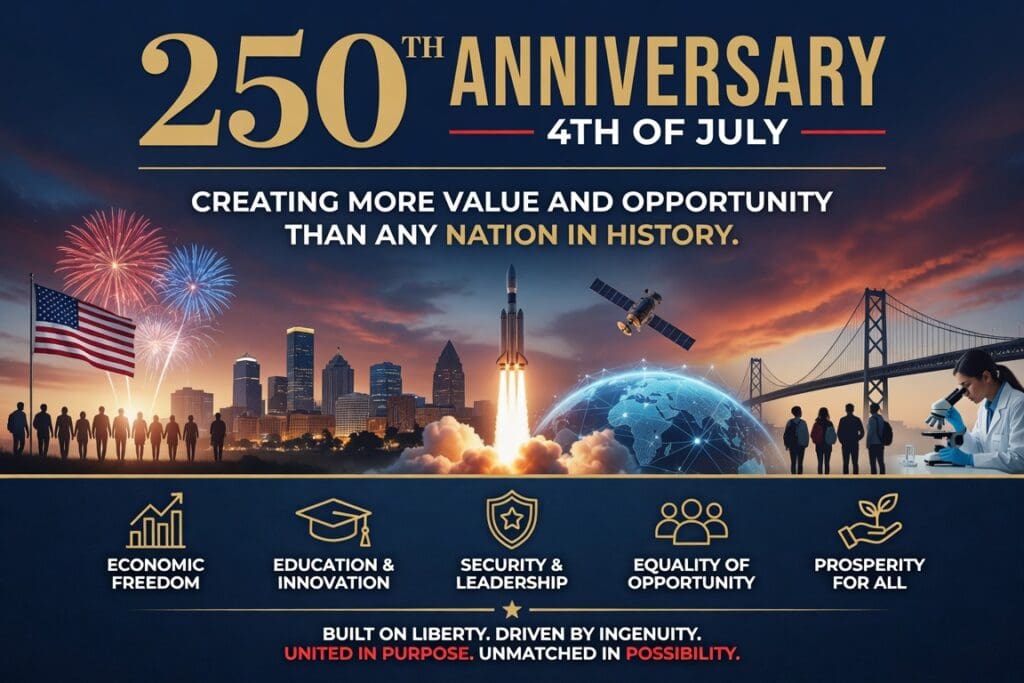
For 250 years, the United States has operated under a constitutional framework designed to distribute authority and protect the interests of its citizens. That design created conditions that supported initiative, innovation, and broad economic progress. Like any well-functioning organization, the Constitutional Republic depends on clear distinctions between insiders and outsiders.
A corporation does not simply accept anyone who walks through the door. It maintains a deliberate recruiting and screening process. It evaluates candidates based on merit and their ability to use corporate resources to create value. Only those who meet the organization’s standards are granted the status of employee or shareholder. Once inside, they gain access to benefits, decision-making rights, and protections that are not extended to outsiders. This selectivity is not viewed as harsh. It is understood as necessary for the organization to survive and create value over time.
The Constitutional Republic operates on a similar principle. Citizenship is not an open invitation extended to anyone who enters the territory. It is a defined status that carries both rights and responsibilities. Just as a corporation has a duty to protect the interests of its shareholders and employees rather than diluting those interests by extending them indiscriminately, a constitutional republic has a duty to maintain clear boundaries around citizenship and political participation.
The Consequences of Blurred Boundaries
When large numbers of people enter the country illegally and gain access to public benefits funded by citizens, the connection between contribution and reward is distorted. When elections are not effectively secured and reserved for citizens, the fundamental mechanism of accountability in a republic is compromised. These outcomes do not strengthen the system. They gradually erode the structural distinctions the constitutional framework depends on.
A corporation that extended voting rights, health benefits, and governance participation to non-employees would quickly undermine its own ability to function. The same principle applies to a nation. When the distinction between citizens and non-citizens is not clearly maintained and enforced, the system’s ability to reward merit, maintain accountability, and generate broad Created Value is weakened over time.
Restoring Structural Integrity
The Constitutional Republic has endured because its core design channeled human energy into productive effort while maintaining meaningful distinctions between citizens and non-citizens. After 250 years, the most important task is to reassert those distinctions in practice.
This requires enforcing immigration law, securing elections so that only citizens participate, and ensuring that public benefits primarily serve those who are lawfully part of the political community. These steps are not about hostility toward outsiders. They are about preserving the conditions under which citizens can continue to build, innovate, and generate value within a system that protects their interests and holds leaders accountable.
A republic that loses the willingness to maintain clear boundaries around citizenship and political participation eventually loses the ability to sustain the advantages it was designed to protect.
Humaculture® Featured Among Ten Thought Leaders Driving Change
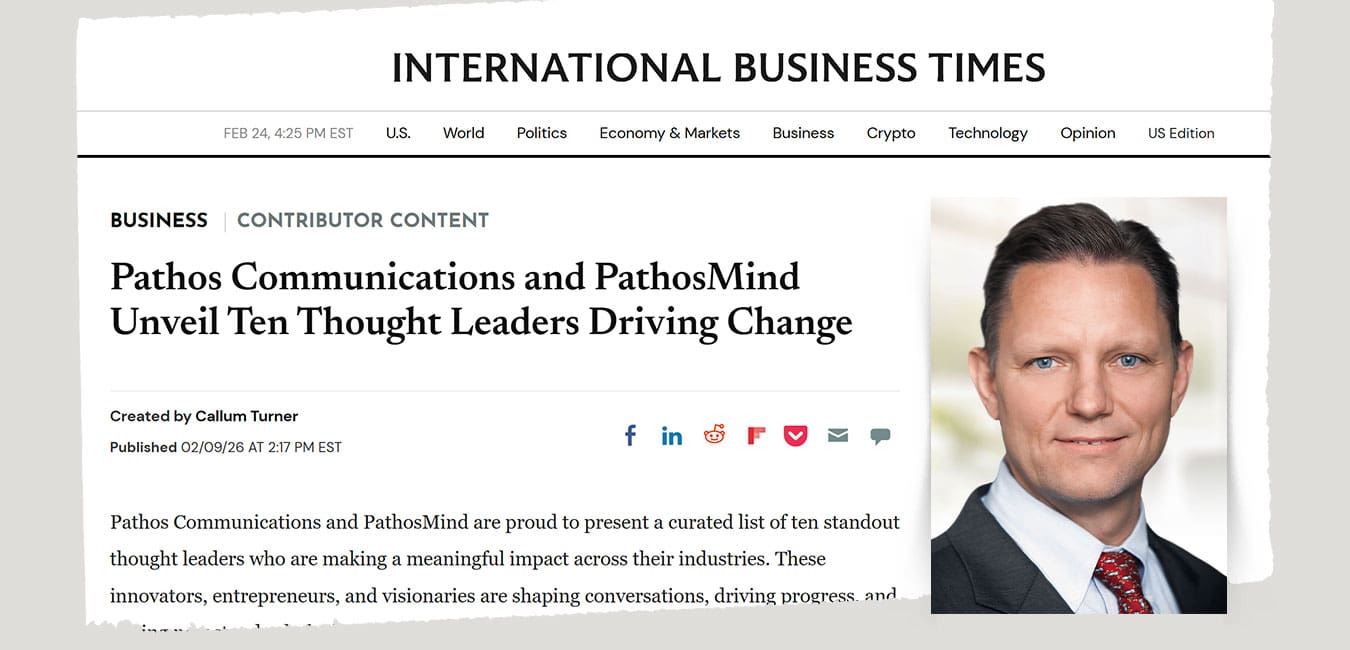
We’re pleased to announce that Humaculture, Inc. has been recognized in the latest International Business Times feature: “Pathos Communications and PathosMind Unveil Ten Thought Leaders Driving Change”.
Co-founder Steve Cyboran is highlighted for the Humaculture® Topological Model – a distinctive, evidence-based framework that helps executives, entrepreneurs, and leaders across business, nonprofit, and public sectors build resilient, high-performing organizations.
Rooted in the prescient analogy of sustainable horticulture, the Model views the Environment Domain as the broader terrain, the Organization Domain (with its Structures, Assets, and Processes) as well-tended “soil” forming an intentional “garden or landscape,” and People as thriving “plants” that generate abundant Created Value.
The guiding maxim is simple and powerful: “feed the soil, not the plant.” By enriching systemic Processes rather than forcing outcomes on individuals, the non-hierarchical Dynamic Matrix enables fluid, cyclical interactions across three Domains and nine Expressions – delivering natural growth and sustainable results.
This approach stands apart from conventional top-down models by emphasizing Equality of Opportunity and Merit-Based Talent Cultivation. Rigorous application yields the Three Promises:
- Effectual – tangible outcomes (reduced absenteeism, lower disability costs)
- Emotional – resilience-building resonance
- Economic – defensible viability and ROI
This recognition reinforces our commitment to providing merit-focused leaders with timeless, systems-level guidance for lasting organizational abundance – no ideology, no shortcuts.
Read the full profile here: IBTimes Feature
We welcome your thoughts – what organizational challenge are you working to solve right now?
#Humaculture #TopologicalModel #FeedTheSoilNotThePlant #CreatedValue #MeritBasedTalentCultivation #OrganizationalResilience
Grocery Industry HR Survey 2025: Key Insights for Regional Retailers
Posted by Humaculture®
September 18, 2025
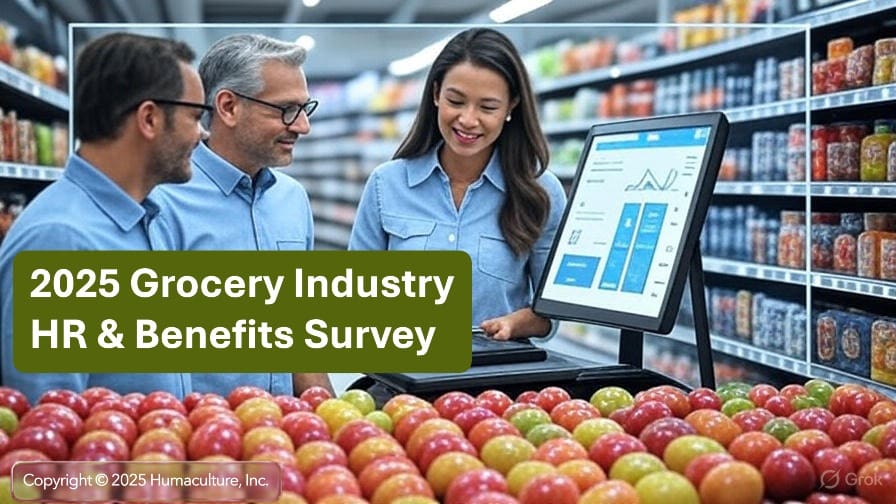
With grocery prices up ~25% since 2020 and labor shortages intensifying, regional grocers need innovative workforce strategies to stay competitive. At Humaculture®, we’re excited to launch the Grocery Industry HR Survey 2025, designed to deliver actionable insights for regional grocery stores facing grocery HR challenges like turnover, rising costs, and policy shifts.
Why Participate in the Grocery Industry HR Survey?
The Grocery Industry HR & Benefits Survey uncovers correlations between HR practices, total rewards, and outcomes like employee retention, productivity, and labor cost management. By joining, you’ll gain:
- Exclusive Benchmarking: Compare your practices to industry trends.
- Actionable Insights: Address labor shortages in the grocery industry and optimize employee retention in grocery stores.
- Industry Leadership: Contribute to a report shaping grocery industry benefits trends.
Watch a replay of our Grocery Industry HR Survey 2025 Webinar to learn more.
Take the Grocery Industry HR Survey 2025 now.
Addressing Grocery HR Challenges in 2025
Regional grocers face unique pressures:
- Economic Shifts: New tariffs and inflation increase costs.
- Labor Shortages: Immigration policies risk short-term workforce gaps, raising labor costs.
- Competition: Big-box stores and discounters challenge market share.
- Consumer Trends: Private-label products hold over 20% market share with near-universal adoption, demanding agility.
Our survey explores regional grocery workforce strategies for:
- Attracting and Retaining Talent: Competitive compensation and benefits.
- Boosting Productivity: Training and workplace culture initiatives.
- Managing Costs: Balancing wages with operational efficiency.
Learn how our total rewards philosophy leads success in a grocery setting.
Engaging with the Grocery Industry
Humaculture® is committed to driving industry-wide impact by sharing insights at key grocery events where HR and workforce topics take center stage:
- Grocery Impact 2025 (November 5-7, Orlando): Focused on “The Power of People,” featuring sessions on leadership, talent development, and innovative HR strategies.
- Groceryshop 2025 (September 28–October 1, Las Vegas): A hub for grocery innovation, including discussions on tech-driven workforce solutions and supply chain impacts on labor.
These events align with 2025 HR trends like skills-based hiring, AI integration, and financial wellness programs—key areas our survey addresses. Join us to spark conversations on empowering regional grocers.
Survey Highlights
- Quick and Confidential: 25-30 minutes, anonymized responses.
- Comprehensive: Covers compensation, training, culture, and grocery industry benefits trends.
- Incentives:
- Executive summary and benchmarking report.
- Recognition in an upcoming Humaculture® whitepaper.
- Personalized report via a follow-up meeting.
Join Us to Shape Grocery HR
Take the Grocery Industry HR Survey 2025 and share on LinkedIn or X with #GroceryHR to drive industry change. For questions, contact any of our team members:
| Steve Cyboran | CEO, Consulting Actuary, Chief Behavioral Officer |
| Wes Rogers | President, Humaculturist® |
| Paula Labian | Former CHRO, HAC/Whole Foods |
| Marc Jones | Former CEO, HAC |
| Sam Martin | Former CEO, A&P, SVP Operations, Wild Oats Market |
FAQ: Grocery Industry HR Survey 2025
- What is the Grocery Industry HR Survey?
A 25-30 minute survey addressing grocery HR challenges like turnover, labor costs, and benefits for regional grocers. - How can regional grocers benefit?
Gain benchmarking data and actionable insights for employee retention in grocery stores. - Is it confidential?
Yes, responses are anonymized, ensuring candid feedback.
Humaculture® is a registered trademark of Humaculture, Inc.


