
Tag: alignedculture
Cultivating Operational Excellence: Applying the Topological Model in High-Impact Facility Launches

As a leader responsible for launching major operational facilities from the ground up, you face tight deadlines, complex stakeholder demands, and the need to produce results quickly. The real leverage does not come from pushing people harder. It comes from redesigning the Processes and Structures in which they work, feeding the organizational “soil” so that People can consistently deliver Created Value.
Scott Villwock provides a clear illustration of this principle in action. A senior operations leader with deep experience across multi-site manufacturing, distribution, and logistics, Scott stepped into two large-scale, ground-up operational roles: the ExxonMobil campus consolidation and a 1.2 million square foot Amazon fulfillment facility. In both cases he was responsible for everything that moved once the buildings were standing, including newspapers, executive relocations, food service, furniture, deliveries, and the thousands of daily transactions that keep a complex site functioning. He also applied the same disciplined approach at other operations.
The difference between struggle and breakthrough came down to how the underlying work was designed and how accountability was built into the system.
When the Building Was Ready, the Work Still Had to Grow
Both the ExxonMobil and Amazon projects demanded rapid integration of diverse teams, legacy processes, and aggressive timelines. Facilities and equipment mattered. So did the design of the work itself.
In another example, Scott was charged with improving an order fulfillment process plagued by a poor on-time delivery rate of just 34%. Orders arrived in a chaotic free-for-all. Multiple people handled different parts of the same order, but no one was responsible for the order from start to finish. Errors and finger-pointing were common because no single person owned an order from start to finish.
The pressure could easily have led to more supervision, more urgency, and more reminders to work faster. Instead, Scott chose to redesign the team’s process.
Scott and the team redesigned the Process. They changed how orders came in, how they were processed, how they were pulled, how they were loaded, and how they were verified. The free-for-all became clear “cradle-to-grave” ownership. One person became responsible for an order from receipt through distribution, pulling, loading, and verification. Combined with transparent weekly KPI posting and open team discussions about what was working, on-time delivery rose from 34% to 97%.
As ownership became clearer, the tone of the work changed. Conversations moved from blame to improvement. Team members could see progress, name obstacles, and take pride in results they helped create. The daily experience of the work itself became more coherent and less exhausting.
The same continuous-improvement mindset, rooted in Lean principles, guided safety and performance work across the ExxonMobil and Amazon sites. Scott applied Lean tools such as the 5 Whys method to uncover root causes and Kaizen to support steady, incremental improvements to Processes. At the ExxonMobil campus, structured safety Processes, consistent walkthroughs, and these Lean practices produced more than 65,000 hours without recordable incidents. At Amazon, he adapted national best practices to local conditions and converted generic training into facility-specific programs that built real capability.
Blending Perspectives and Securing Buy-In
Scott’s approach began with listening. He absorbed what the organization and its people actually needed before applying his operational experience. In rooms full of engineers focused on models, he contributed practical ground-level reality. The result was productive compromise that improved both design and execution.
When organizational structures or role responsibilities needed adjustment, he involved the team. Changes were discussed until the group saw the logic. When people participate in the decision, they develop a sense of ownership because they remember they agreed to it, which makes rollout and accountability far easier.
This is Performance Nurturing and Cultural Nurturing in practice. People gain clear Knowing of what good looks like, Wanting through ownership and visible progress, Ability because the right Processes, tools, and resources remove barriers to execution, and Capacity because job expectations, workload, and organizational design are aligned to support the work as designed.
What Changed When the “Soil” Was Rebuilt
The Humaculture® Topological Model helps leaders see why this approach produced lasting results. Scott did not simply ask People to try harder. By redesigning key Processes, including “cradle-to-grave” order ownership and transparent weekly KPI reviews, and strengthening Structures such as role clarity and shared accountability, then pairing those changes with the right facilities, equipment, and data, he made it possible for People to put the organization’s Assets to work and Create Value. Stronger performance became the natural result rather than a constant act of will.
The work enriched Processes and Structures. It strengthened the conditions that allow People to succeed. The Three Promises followed naturally. Effectual outcomes appeared as measurable jumps in on-time delivery, safety hours, and operational throughput. Emotional outcomes emerged as teams felt ownership, celebrated wins together, and trusted the process because they helped shape it. Economic outcomes showed up in sustainable efficiency and reduced waste that protected margins and enabled scale.
These were not one-off fixes. They were systemic improvements in how work flowed and how Talent was enabled through Merit-Based Talent Cultivation, clear expectations, skill development, and recognition tied to contribution.
What Leaders Can Take Back to Their Own Operations
Any leader can follow the same sequence when applying the Topological Model in operations:
- Start as a learner. Absorb organizational needs before applying solutions.
- Integrate perspectives. Blend technical expertise with operational reality for robust outcomes.
- Make safety and transparency non-negotiable Processes. Track, share, and act on data openly.
- Secure buy-in on structure and roles. Adjust dynamically with team input.
- Celebrate progress. Recognition sustains momentum beyond compensation alone.
- Focus on enablement. Clear Knowing (what to do), Wanting (motivation through ownership), Ability (barriers removed), and Capacity (bandwidth supported) turns potential friction into coordinated excellence.
Whether you are launching new facilities, optimizing existing operations, or aligning Total Rewards with operational goals, the pattern remains the same. Strengthen the “soil” through intentional Processes and Structures, and People will deliver lasting Created Value.
Scott Villwock’s work shows what becomes possible when leaders treat the design of work itself as the primary lever. The “harvest” was not only stronger performance in a single moment. It was a renewed operating cycle in which clearer Processes, stronger Structures, and more capable People could keep producing Created Value under pressure, day after day. The same principles are available to any organization willing to examine and improve its own Processes and Structures.
Contact: Steve Cyboran at Steve.Cyboran@Humaculture.com, Wes Rogers at Wes.Rogers@Humaculture.com, or Caroline Cyboran at caroline.cyboran@humaculture.com, Scott Villwock at svillwock2004@yahoo.com
Website: humaculture.com
LinkedIn: humaculture-inc
Humaculture®: From Short-Term Extraction to a THRIVE Mindset

Bees aren’t bound to the flowers — they come and go freely. Flowers freely offer their nectar. Together, they create far more value than either could alone. This is the essence of Created Value in a THRIVE mindset.
In today’s competitive environment, many organizations still operate under a short-term, self-serving mindset. On one side, employees often adopt the attitude of “take what I can get from the organization and do as little in return as possible.” On the other, leaders and managers frequently view People primarily as resources to extract maximum output for organizational profit and their own gain. This transactional dynamic leads to predictable results: elevated burnout, high turnover, rising disability costs, stalled innovation, and productivity that eventually plateaus.
Humaculture® offers a proven alternative — a systemic shift to a nurturing, flourishing mindset that builds resilient organizations capable of delivering abundant Created Value year after year.
At the heart of this transformation is the Humaculture® Topological Model: a non-hierarchical Dynamic Matrix that interconnects three Domains—Environment, Organization, and People. Instead of forcing outcomes from individuals or squeezing People for short-term gain, the model enriches the Organization Domain through optimized Structures, Assets, and Processes. This enabling framework fosters Well-being—employee health and resilience—as a critical precursor, allowing People who are motivated to create value to contribute naturally and sustainably. Created Value (innovation, productivity, and service excellence) remains the primary goal, with Well-being serving as the resilience foundation that makes sustained high performance possible for everyone.
The shift replaces outdated “performance management” and “human resources” terminology and practices with Performance Nurturing and People Development. It moves from entitlement patterns and extractive leadership to Merit-Based Talent Cultivation and Talent Diversity and Collaboration—ensuring equality of opportunity rooted in contribution and results. Leaders who recognize the need for People who desire to create value and allocate resources accordingly enable the entire organization to thrive.
This philosophical realignment also meaningfully reduces collective bargaining risk. As Elon Musk observed: “If Tesla gets unionized, it will be because we deserved it and because we failed in some way.” The Humaculture® approach aligns leadership and workforce around shared Created Value rather than zero-sum extraction, fostering a healthier, more collaborative relationship between leadership and its workforce.
Practical interventions demonstrate the difference immediately. Using our ROOTS™ Total Rewards framework and THRIVE™ framework (an integrated approach, organizations can replace generic approaches with targeted, evidence-based interventions that strengthen Well-being through merit-based, personalized support. Consolidated performance-based PTO policies, for example, have delivered 60% reductions in unscheduled absences, 80% drops in extended leaves, and 30% lower turnover among top performers—while naturally addressing underperformance. Weekly check-ins replacing annual reviews reclaim significant time previously spent on administrative performance processes, dramatically improving feedback quality, trust, operational efficiency, and emotional resilience.
These changes deliver our Three Promises with measurable precision:
- Effectual Promise — Tangible gains in productivity, faster return-to-work, and reduced absenteeism.
- Emotional Promise — Authentic resonance and empowerment through merit-based systems that build genuine commitment and resilience.
- Economic Promise — Defensible ROI via lower claims, contained costs, and multiplied Created Value that compounds over time.
Organizations that fully adopt this nurturing framework achieve higher People Health Quotient (PHQ) and Organization Healthful Quotient (OHQ), meaningful reductions in disability and health costs, stronger retention and engagement, and generational sustainability—outcomes that extraction-based models simply cannot sustain.
Leaders ready to make the transition can begin with The Humaculture Survey™ — a standardized, evidence-based diagnostic (much like a professional land survey of both raw terrain and developed property. It assesses existing structures, buildings, infrastructure, roads, parking, and natural features) to fully map the organization’s current state against the Topological Model, identify precise leverage points, and provide clear industry benchmarking.
This shift requires a deliberate transitional period, as current employees and leaders may carry entrenched mindsets from the old paradigm; organizations that invest thoughtfully in this mindset evolution see the greatest long-term gains.
From there, targeted ROOTS™ and THRIVE™ implementations or Process enrichments deliver rapid leverage points across the Dynamic Matrix.
The choice is clear: continue operating with a short-term, self-serving extraction mindset or cultivate an environment where leaders and People work together to create maximum value—for decades to come.
#Humaculture #MeritBasedTalentCultivation #DynamicMatrix #CreatedValue #FeedTheSoilNotThePlant #OrganizationalResilience
LinkedIn: humaculture-inc
Worst to First: How Three NFL Teams Instinctively Strengthened Structures by Applying Humaculture® Topological Model Principles

This article is the third in our Team Sports Series, where we explore how elements of the Humaculture® Topological Model are transforming high-performance organizations through unique approaches to cultivation, even when those approaches are applied instinctively rather than through intentional adoption of the full framework. (Read the first two articles in the series: From Underdog to Unbeaten Champions: Indiana Hoosiers and USA Hockey’s Golden Sweep: Lessons in “Feeding the Soil” for Instant Team Cohesion.)
As the 2026 NFL Draft dust settles this week, teams across the league are celebrating their new talent acquisitions. Yet the three 2025 worst-to-first stories featured here offer a deeper lesson: sustainable success doesn’t come from simply adding more “plants.” It comes from cultivating the right “soil” — the Structures and Processes that allow talent to flourish.
Professional sports teams operate in a uniquely demanding ecosystem. Unlike traditional corporations with multi-year planning horizons, they face compressed performance cycles measured in weeks, relentless public and media scrutiny, strict regulatory constraints such as salary caps, and highly fluid talent markets where players move freely through free agency, trades, and contract negotiations. These conditions place extraordinary pressure on the Organization Domain, particularly its Structures (contractual obligations, governance mechanisms, and accountability systems), while amplifying the need for precise alignment across the People Domain and adaptive Performance Nurturing Processes. In this high-stakes environment, even small shifts in how an organization cultivates its “soil” can produce dramatic, visible results.
In the 2025 NFL season, three teams with losing records in 2024, the Chicago Bears (5-12), New England Patriots (4-13), and San Francisco 49ers (6-11), finished among the league’s best. While none of these organizations explicitly used the Humaculture® Topological Model, each coincidentally exemplified powerful applications of its core principles: cultivating unique “soils” (organizational environments) tailored to their specific Domains, Expressions, and Elements. The results were extraordinary.
What these three worst-to-first stories demonstrate is the remarkable potential of the Humaculture® Topological Model as an adaptive framework. When organizations intentionally embrace and fully apply its principles, cultivating unique “soils” tailored to their specific Domains, Expressions, and Elements, extraordinary and sustainable results become not just possible, but predictable.
New England Patriots – Full Soil Rebuild Through Strengthened Structural Commitments
The Patriots’ turnaround began with a clear commitment at the highest level. Owners made significant Structural commitments by entering into contracts that obligated the allocation of Assets (salary cap space, compensation, benefits, and facilities access) to targeted culture-fit veterans who had already thrived in merit-based systems elsewhere. These contractual Structures established formal obligations, accountability mechanisms, and governance rules that aligned People Domain commitments with the organization’s desired culture.
Processes were equally intentional. Head coach Mike Vrabel instituted daily reinforcement practices, including structured team meetings and consistent messaging centered on belief, identity, and the rallying cry “no one gave us a chance… we believed.” These were operationalized through repeatable Cultural Nurturing and Performance Nurturing Processes that built a shared Personal Characteristic of unshakeable confidence and unity across the roster. The result was a complete cultural reset that turned a 4-13 team into a 14-3 division winner.
Player Spotlight: Stefon Diggs
Stefon Diggs arrived from the Texans, where a late-2024 anterior cruciate ligament (ACL) injury combined with scheme and cultural mismatch had limited his production and voice. In New England, the organizational Structures (clear contractual roles, accountability systems, and high-trust governance) combined with aligned Processes and People Domain elements created conditions where Diggs could fully express his strengths. He delivered 85 catches for 1,013 yards and 4 touchdowns while becoming a vocal leader who elevated young quarterback Drake Maye. The difference was not “better soil” in the literal sense — it was a demonstrably different alignment of Structures, Processes, and People that allowed his talent to flourish.
Chicago Bears – Cultivating Key Ecosystem Elements Through Evolved Structures
The Bears focused on building cultivated “soils” from key portions of the ecosystem. They emphasized targeted depth development through refined Structural mechanisms (contractual depth allocation, transparent evaluation systems, and governance frameworks) paired with owner-backed commitment to a new $2+ billion stadium and associated training facilities.
Structures played a central role. Leaders scheduled time for rituals, chants, and mantras to ensure these Processes were not neglected. Explicit norm-setting sessions fostered shared values. The mantra “players make coaches” was operationalized through new power-dynamic Structures that allowed merit to rise naturally.
Processes brought the culture alive daily. Mental-toughness rituals, chemistry-building exercises, and the iconic “Good, better, best” rallying cry became the team’s signature locker room chant after every win, led by head coach Ben Johnson. These operationalized Cultural Nurturing Processes built resilience and high-energy identity.
Player Spotlight: Caleb Williams
As a 2024 rookie, Caleb Williams displayed flashes of brilliance but remained inconsistent in a rigid scheme that did not yet fully nurture his creative decision-making and improvisation. In 2025, the Bears deliberately nurtured that creativity through Skill Development Processes tailored to his strengths, including Run-Pass Option (RPO) concepts, designed rollouts, and simplified reads, and an Environment Domain supported by evolved Structures (clear role definitions, supportive coaching staff, and a scheme that rewarded his natural playmaking ability). The result: 3,942 passing yards, 27 touchdowns, and just 7 interceptions. The “Cardiac Bears” comeback culture emerged as young talent and veterans collaborated at elite levels, a direct outcome of the enriched ecosystem.
San Francisco 49ers – Adaptive Refinement of Structures and Processes
The 49ers executed a dramatic special-teams overhaul. After finishing last in Special Teams Expected Points Added (EPA) in 2024, they waived kicker Jake Moody and signed Eddy Piñeiro. Under coordinator Brant Boyer, the unit surged to second in the NFL in Special Teams EPA in 2025, a 6.5-point swing per game.
This was a clear example of Performance Nurturing Processes refined through Structural mechanisms (personnel decisions and new coordinator governance). They also refined defensive coordination with Robert Saleh’s return, elevating the defense to top-10 rankings. Targeted contractual depth protected star players and maintained roster resilience.
Player Spotlight: Christian McCaffrey
McCaffrey, already a star, benefited enormously from these refined Structures and Processes. Improved special-teams field position gave him more opportunities in favorable situations, better-coordinated defensive schemes created more favorable game scripts that reduced physical wear, and contractual depth that allowed him to stay fresh created conditions for sustained excellence. His production and leadership elevated the entire team, showing how even small, intentional refinements in Structures and Processes can produce outsized results when aligned with the broader organizational “soil.”
The Common Thread: Unique Cultivation Through Strengthened Structures
Each of these three organizations cultivated its “soil” differently by strengthening key Structures in alignment with the Humaculture® Topological Model:
- Patriots: Full rebuild through contractual Structures that obligated Asset allocation to culture-fit veterans, paired with institutionalized Processes that reinforced belief and identity, creating a complete cultural reset from 4-13 to 14-3.
- Bears: Targeted cultivation of key ecosystem elements through evolved Structural mechanisms paired with daily Processes that included mental-toughness rituals, chemistry-building exercises, and the iconic “Good, better, best” rallying cry — all of which unlocked creative talent and long-term stability.
- 49ers: Adaptive refinement of Structural mechanisms (coordination frameworks and contractual depth allocation) and Performance Nurturing Processes (special-teams overhaul and defensive scheme evolution) for maximum efficiency and resilience without a full rebuild.
While these organization didn’t set out to apply the Humaculture® Topological Model, each instinctively aligned key Elements, particularly Structures (including contractual obligations), in ways that produced measurable, sustainable excellence.
What these three worst-to-first stories demonstrate is the power of the Humaculture® Topological Model as an adaptive framework. These are examples of aspects of the model being instinctively employed. What could be accomplished if the Model is embraced and fully applied intentionally?
This article is the third in our Team Sports Series, where we explore how the principles of the Humaculture® Topological Model are transforming organizations into high-performing organizations through unique soil cultivation.
Ready to cultivate your own organization’s “soil”? Whether you lead a football team, Fortune 500 company, or growing startup, the Humaculture® Topological Model scales. Explore the full framework, read the From Underdog to Unbeaten Champions: Indiana Hoosiers or USA Hockey’s Golden Sweep: Lessons in “Feeding the Soil” for Instant Team Cohesion case studies, or connect with our team to begin your turnaround.
Contact:
Steve Cyboran at Steve.Cyboran@Humaculture.com
Wes Rogers at Wes.Rogers@Humaculture.com
Caroline Cyboran at caroline.cyboran@humaculture.com
Website: humaculture.com
LinkedIn: humaculture-inc
Building the Integrative Health Partnership Network for Workforce Resilience

Part 5: Building the Integrative Health Partnership Network. Selecting and Aligning Partners for Sustainable Workforce Resilience
March 26, 2026
By Humaculture, Inc.
This is the fifth and final article in our 5-part companion series to ICSL’s analysis of post-COVID health trends and morbidity pressures. In Part 1 we examined the broad crisis of rising chronic conditions driving costs. In Part 2 we applied the Topological Model to variable-demand operations like trucking. In Part 3 we explored chronic surges across large workforces using real employer data. In Part 4 we showed why pharmacology alone falls short and how integrative soil cultivation creates lasting resilience. Here we turn to the final step: how you build a holistic, integrative health partnership network in which every vendor and every program focuses first on integrative health for workforce resilience — addressing the underlying root causes that led someone to need treatment in the first place, rather than simply treating symptoms with pharmaceuticals or surgery.
While ICSL’s ForwardLiving Integrative Platform (FLIP) focuses on creating a platform of vetted integrative health providers, Humaculture® offers the Organizational framework for selecting and aligning all partners across your entire benefits ecosystem towards integrative health. You refine “soil” (Structure, Assets, Processes—the Organization Domain) so the complete network of vendors, insurers, and internal programs works in harmony to support natural, sustainable resilience and Created Value.
As a leader responsible for benefits strategy, risk management, or workforce health, you have now seen the full picture. You have seen the persistent cost pressures and claim surges. You have seen the real impact on employers through rising disability, lost workdays, and productivity challenges. You have seen that even promising tools like GLP-1 drugs provide only short-term relief because the underlying drivers remain unaddressed.
The question is no longer whether action is needed. The question is how you build a complete network of partners that consistently delivers integrative-first results. Just as an unhealthy plant produces little to no fruit, an employee with poor Well-being produces little to no Created Value. In horticulture, fertilizer and pesticides may help to some degree, but there are always unintended consequences and the nutrient density is diminished. The same is true with the quality and extent of the Created Value.
The Limitation of Fragmented or Misaligned Partnerships
Many organizations still select partners in silos. One vendor handles pharmacy benefits while another manages wellness and a third oversees disability programs. Each partner may have good intentions, yet when the primary goal becomes adherence to prescription protocols rather than root-cause health improvement, the entire system remains misaligned. The result is fragmented programs, duplicated costs, app fatigue, and persistent reliance on short-term fixes that fail the moment the inputs stop.
Frustration builds as costs continue to climb and workforce resilience stays fragile. The underlying health of the Organization, like the underlying health of the soil, was never truly built.
The Humaculture® Topological Model: A Practical Guide for Integrative Health Partnership Selection
The Humaculture® Topological Model gives you a clear framework for this final step. It shows exactly where to refine the Organizational “soil” so the entire network of partners supports natural, sustainable resilience.
| Domain | Challenges (Current State) | Success (Integrative Outcome) |
|---|---|---|
| Environment Domain | Rigid regulations, high drug costs, limited access to preventive care | Strong partnerships with vendors that prioritize integrative protocols and flexible plan designs |
| Organization Domain | Fragmented benefits programs, misaligned vendors, pharmacology-first defaults | Clear standards across all health, wellness, leave, disability, and workers’ compensation programs; every partner adopts integrative-first protocols (Food as Medicine, Exercise as Medicine); misaligned vendors are replaced |
| People Domain | Unaddressed personal distractions and low intrinsic motivation | Empowered, accountable Talent inclined toward health, with the tools and autonomy to perform at their best |
When you intentionally orchestrate the Topology between these Domains through the Dynamic Matrix, the entire partnership network becomes self-reinforcing. Resilient People produce sustainable Created Value cycle after cycle.
The Decisive Choice: Build the Integrative Health Partnership Network
The turning point comes when you choose intentional, integrative cultivation over pharmacology-first fixes. Instead of another drug-centric incentive or coverage expansion, you reallocate Assets toward merit-based Processes designed to attract and retain empowered Talent already inclined toward health. You establish clear standards and expectations across all health, wellness, leave, disability, and workers’ compensation programs and require every solution provider partner to adopt integrative-first protocols (Food as Medicine, Exercise as Medicine), ensuring full alignment and replacing any misaligned vendors that prioritize pharmacology-only approaches.
This is how you move from fragmented programs to a true integrative health partnership network. Every vendor, every program, and every internal process works in harmony to support root-cause health rather than symptom management.
Anonymized client data shows this works. Organizations that applied these standards saw recurring claims and utilization decline meaningfully. Organizations that continued with misaligned, pharmacology-focused partners saw recurring claims, program dropout, and sustained high costs because the underlying drivers of poor health were never addressed, creating a cycle of prescription dependency.
Resolution: Measurable Victory and Renewed Operations
Organizations that consistently feed the Organizational “soil” and align every partner around integrative-first principles achieve balanced, lasting success. The resolution is measurable victory: higher People Health Quotient (PHQ) and Organization Healthful Quotient (OHQ), meaningful reductions in disability costs and absenteeism, stronger retention and engagement, substantially multiplied Created Value, and a renewed operation ready for the next cycle. Just as organic gardening produces fruit with significantly higher nutrient density, integrative “soil” cultivation (Organization Domain refinement) yields resilient People who deliver superior, sustainable outcomes.
For leaders ready to build this network, the results include:
- Economic. Strong multi-dollar returns on investment. Meaningful reductions in medical spending, disability costs, and indirect disruptions. Easier recruiting of ideal Talent. Reduced turnover. Fewer recurring claims. Recovered productivity that directly protects financial stability.
- Effectual. Tangible risk reduction. Lower chronic disease progression. Decreased utilization severity. Faster recovery from health events. Measurable declines in the key post-COVID morbidity drivers.
- Emotional. Authentic resonance through merit-based recognition, constructive challenge, and mission alignment. This builds voluntary engagement and retention rather than dependency or resentment.
The outcome is multiplied Created Value. Higher retention, more productive teams, more stable operations, reduced absenteeism and disruptions — the organization becomes self-reinforcing. Resilient People produce sustainable fruit cycle after cycle.
Take the First Step
As a starting point, contact Humaculture® for a review of your medical, disability, workers’ compensation, and absenteeism data, mapped to the Dynamic Matrix. We’ll identify leverage points to cultivate resilience and Created Value in your unique terrain and help you evaluate and align every partner in your network.
Read the companion ICSL article for the full view of the ForwardLiving Integrative Partnership (FLIP). Join us in building organizations where every partner, every program, and every process works together so People don’t just manage chronic risk. They flourish despite it.
Contact: Steve Cyboran at Steve.Cyboran@Humaculture.com, Wes Rogers at Wes.Rogers@Humaculture.com, or Caroline Cyboran at caroline.cyboran@humaculture.com
Website: humaculture.com
LinkedIn: humaculture-inc
Humaculture® — Cultivate Organizations, Grow People.
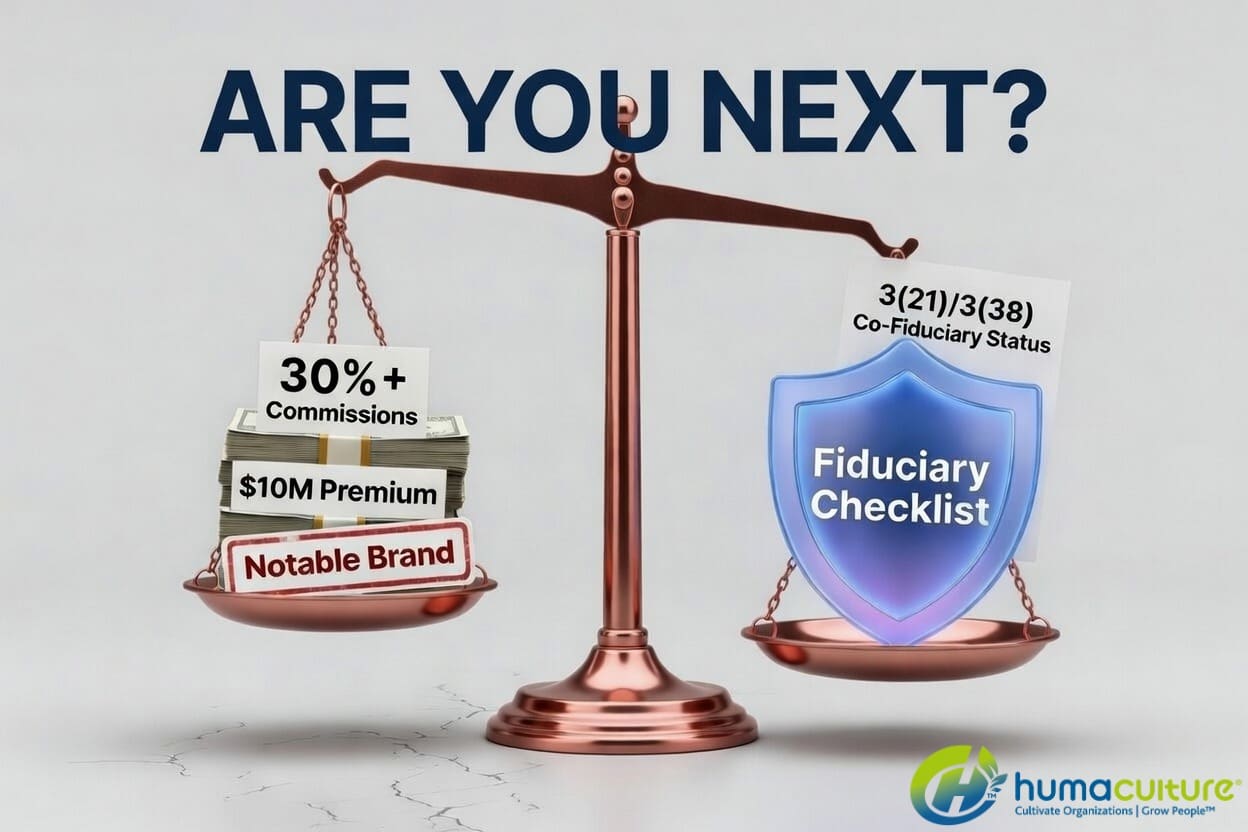
Are You Next in Line for a Fiduciary Lawsuit Over Your Supplemental Health Plans?
A Humaculture® Perspective on Prudent Governance and Created Value
Date: March 10, 2026
Prepared by Humaculture, Inc.
Introduction
Recent ERISA litigation has brought new attention to ERISA fiduciary risks for plan sponsors who manage supplemental health plans. These voluntary benefits include critical illness, accident, and hospital indemnity coverage. In December 2025, class action lawsuits filed by Schlichter Bogard & Denton named both employers and their benefits consultants as defendants. The complaints alleged fiduciary breaches tied to plan oversight, fee reasonableness, and potential conflicts of interest. Cases targeted organizations such as United Airlines, CommonSpirit Health, Allied Universal, and LabCorp. These actions mark an expansion of ERISA scrutiny into health and welfare benefits.
Humaculture, Inc. approaches these challenges with the Humaculture® Topological Model. This framework rests on the maxim “feed the soil, not the plant.” Leaders cultivate the Organization Domain through Processes and Structures as enabling “soil.” This approach empowers People, like “plants,” to thrive within the broader Environment, including Rules (e.g., laws and regulations), and produce sustainable Created Value.
Strong fiduciary governance in benefits programs supports the delivery of the Three Promises as outcomes of the Humaculture® Topological Model: Effectual (tangible risk reduction and compliance), Emotional (trust and fairness), and Economic (cost efficiency and resource optimization).
High-Risk Profile for Supplemental Health Plan Litigation
Industry analysis and patterns from recent cases, including insights referenced in the “Blindsided” paper from Employees First, suggest organizations with the following characteristics face particularly elevated risk:
- Broker compensation equals or exceeds 30% of premium
- Total annual premium volume equals or exceeds $10 million
- High-visibility, nationally recognized brand
If your organization matches this profile, proactive review of fiduciary processes is especially urgent.
Parallel Developments with Retirement Plans
The current wave of supplemental health plan litigation follows the same path that transformed retirement plans over the last two decades. ERISA established the fiduciary framework in 1974. The Pension Protection Act of 2006 and the Tussey v. ABB case in 2012 exposed breaches in recordkeeping and revenue sharing. A wave of excessive fee lawsuits followed, making competitive RFPs, benchmarking, full fee disclosure, and co-fiduciary advisors the new standard. The same combination of legislation plus litigation is now driving a similar paradigm shift in health and welfare benefits. The message is clear: what happened in retirement plans is now happening in supplemental health plans.
ERISA Fiduciary Risks: Actionable Checklist for Plan Sponsors
The checklist below helps Plan Sponsors strengthen their practices to fulfill their fiduciary responsibility for supplemental health plans. Proactive steps reduce litigation exposure. The proactive steps also enhance Well-being as a contributor to productivity, support Merit-Based Talent Cultivation, and build organizational resilience.
The “Blindsided” paper from Employees First (June 2025) was referenced in each of these lawsuits, both in the narrative and footnotes, as supporting context for longstanding concerns about these issues. The paper focuses primarily on employers as plan sponsors because the document is geared toward them as the ultimate fiduciaries under ERISA. While the lawsuits name four consultants/brokers (Mercer, Gallagher, Lockton, and WTW) as co-defendants, the paper emphasizes employers’ responsibility to oversee and select advisors prudently. It argues that plan sponsors bear the primary duty to act in participants’ best interests, even if consultants contribute to issues like excessive fees or conflicts. The root cause is often portrayed as a systemic failure in fiduciary processes, but the paper prioritizes actionable steps for employers rather than assigning blame to brokers, to empower sponsors to mitigate risks independently.
Fiduciary Risk Mitigation Checklist for Supplemental Health Plans
Apply this checklist during annual reviews, vendor evaluations, or plan design updates. Document decisions thoroughly to create a prudent process trail.
- Strengthen Governance Through Dedicated Structures
- Form or reinforce a benefits committee with a clear charter. The charter must emphasize ERISA duties of prudence, loyalty, and exclusive participant benefit.
- Include independent expertise and establish Processes for regular training.
- Action Item: Schedule annual fiduciary education and review committee composition within 60 days.
- Formalize Vendor and Consultant Selection Processes
- Conduct competitive requests for proposals with full compensation disclosure, including all overrides, production credits, and revenue-sharing arrangements.
- Prioritize fee-only advisors willing to accept co-fiduciary status under ERISA sections 3(21) or 3(38) to minimize conflicts.
- Action Item: Initiate an RFP cycle if current arrangements exceed three years.
- Ensure Fee Reasonableness and Transparency
- Identify, itemize, and benchmark all fees, services, overrides, production credits, and potential outcomes against industry standards to maximize participant Created Value. Ensure supplemental health plans are not paying a disproportionate share of administrative services.
- Evaluate claims payout ratios and overall participant value.
- Action Item: Engage independent benchmarking and negotiate adjustments where costs appear excessive.
- Align Plan Design with Participant Needs and Created Value
- Confirm offerings provide meaningful, non-duplicative coverage.
- Deliver clear, annual disclosures on costs, benefits, and oversight.
- Action Item: Update Summary Plan Descriptions and gather participant feedback via surveys.
- Embed Ongoing Monitoring via Enabling Processes
- Establish quarterly performance metrics for enrollment, claims efficiency, and satisfaction.
- Use information gathered from Performance Nurturing process to adapt offerings dynamically.
- Action Item: Implement monitoring dashboards and schedule regular committee discussions.
- Secure Protections and Continuous Adaptation
- Maintain robust fiduciary liability coverage that includes health plans.
- Develop response protocols for regulatory inquiries.
- Action Item: Conduct an annual insurance review and consider a simulated fiduciary audit.
How Humaculture® Can Support Your Organization
Humaculture, Inc. helps leaders cultivate resilient organizations with the Humaculture® Topological Model and tools such as the HARS™ (Health, Absence, Resilience Support) framework. We offer independent assessments of total rewards programs, including supplemental health plan governance, without the product sales conflicts of many brokers and consultants. Explore our full range of services and support options.
Independent Consultant vs. Traditional Broker
The choice of advisor is one of the most important Processes in the Organization Domain. Choosing an independent consultant instead of a traditional broker is a direct way to “feed the soil” of strong fiduciary governance. Here is how the two approaches compare:
Note: Many large firms that market themselves as “consultants” continue to earn the majority of revenue from carrier commissions, overrides, and production-based fees — operating with the same conflicts as traditional brokers. True independence requires client-paid fees only and acceptance of co-fiduciary responsibility.
| Aspect | Independent Consultant | Traditional Broker |
|---|---|---|
| Type of Firm | Professional advisory firm licensed to advise on insurance | Insurance agency or brokerage |
| Primary Revenue Source | Client-paid fees | Carrier-paid commissions |
| Pricing Model | Fixed or project-based fees | Percentage of premium (typically 25–40%) |
| Revenue Sharing / Overrides | None | Common (overrides, sales quotas, production bonuses) |
| Represents | The plan sponsor / client | The insurance carriers |
| Primary Focus | Strategic design, participant outcomes, Created Value | Product placement and premium volume |
| Service Style | Comprehensive RFP, actuarial analysis, ongoing monitoring | Transactional renewals and carrier-driven |
| Summary | Unbiased strategic guidance serving only client interests | Services designed to support product sales and servicing |
ERISA Fiduciary Risks Alignment with the Humaculture® Topological Model
The table below shows how an independent consultant strengthens the Organization Domain in the Humaculture® Topological Model by feeding the soil of clean Processes. In short, the broker model fails to recognize how Processes enable healthy Connections between the Organization Domain and People, creating unintended consequences.
| Aspect | Humaculture® Alignment | Practical Outcome in the Model |
|---|---|---|
| Primary Revenue Source & Pricing Model | Client-paid fees vs. carrier commissions | Clean “soil” (no hidden conflicts) vs. contaminated “soil” |
| Revenue Sharing / Overrides | None vs. common overrides | Protects integrity of the fiduciary Processes vs. self-dealing |
| Represents | Plan sponsor vs. insurance carriers | Feeds loyalty and prudence vs. violates exclusive-benefit rule |
| Primary Focus & Service Style | Strategic design and Created Value vs. product placement | Nurtures Created Value vs. treats People as sales opportunity |
| Summary | Unbiased guidance vs. product sales support | Cultivates resilient Organization Domain vs. creates unintended consequences |
Our services cover fiduciary process audits aligned with the Dynamic Matrix, evidence-based plan design recommendations, actuarial-supported ROI modeling for benefits investments, and Cultural Nurturing strategies to enhance engagement and Well-being.
We focus on Merit-Based Talent Cultivation and Equality of Opportunity to deliver balanced outcomes in each of the Three Promises.
ERISA Fiduciary Risks Summary
The evolving ERISA landscape calls for robust, documented fiduciary Processes in supplemental health plans. Leaders who proactively feed the soil through strong governance reduce legal risks and unlock greater Created Value. This includes lower costs, higher resilience, and sustained productivity. Read more of our insights on organizational resilience.
Humaculture, Inc. stands ready to partner with you on this cultivation journey. Contact us to discuss a customized assessment or explore how the Humaculture® Topological Model can optimize your total rewards strategy.
Contact: Steve Cyboran at Steve.Cyboran@Humaculture.com, Wes Rogers at Wes.Rogers@Humaculture.com, or Caroline Cyboran at caroline.cyboran@humaculture.com
Website: humaculture.com
LinkedIn: humaculture-inc
Beyond Pharmacology Alone: Integrative Soil Cultivation for Workforce Resilience
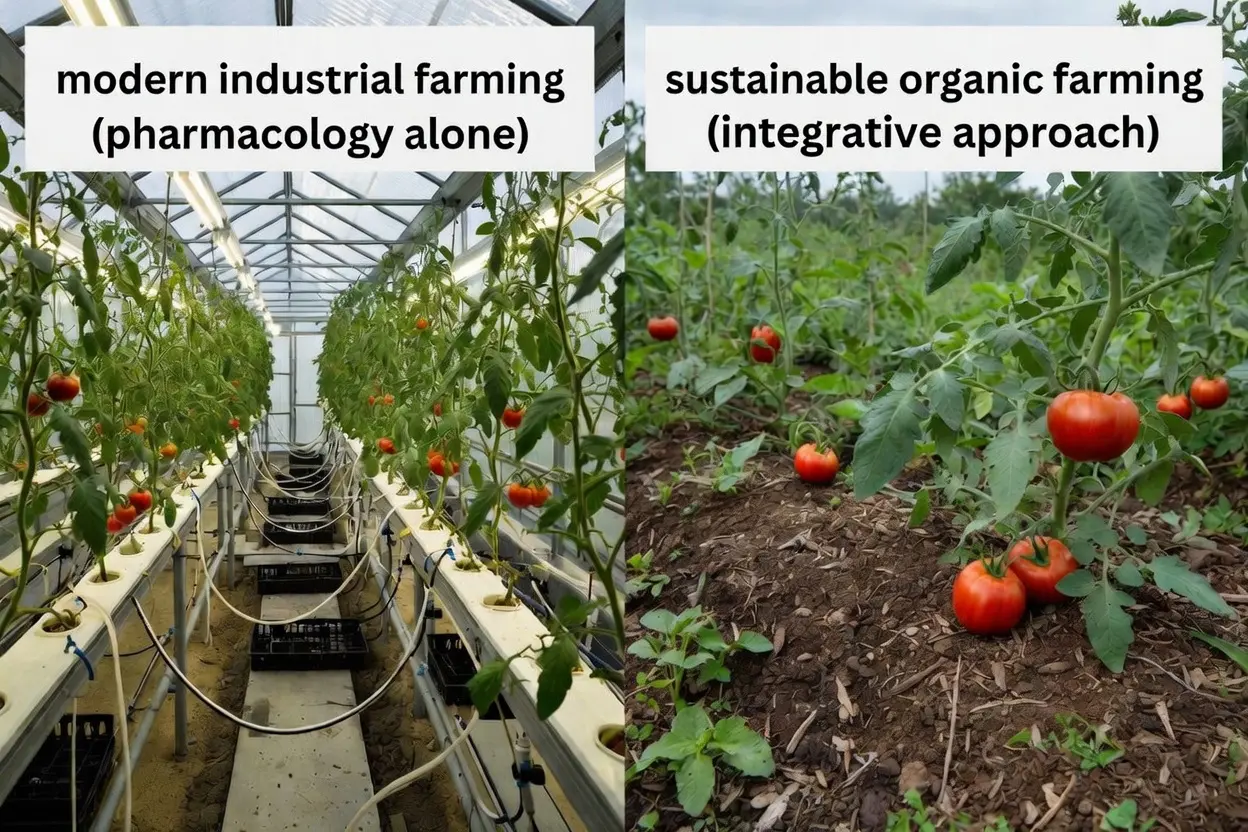
Above image: Modern industrial farming (pharmacology alone) can produce short-term results, but only as long as the constant chemical inputs continue. Stop the inputs and the plants quickly decline, because the underlying soil health was never built. Sustainable organic farming (integrative approach) cultivates rich, living soil that sustains healthy, nutrient-dense fruit even without constant intervention.
Part 4: Beyond Pharmacology Alone. Integrative Soil Cultivation for Lasting Chronic Condition Mitigation
February 20, 2026
By Humaculture, Inc.
This is the fourth in a 5-part companion series to ICSL’s analysis of post-COVID health trends and morbidity pressures.
- In Part 1, we examined the broad crisis of rising chronic conditions driving costs.
- In Part 2, we applied the Topological Model to variable-demand operations like trucking.
- In Part 3, we explored chronic surges across large workforces using actual employer data.
- Here, we build on these insights to examine why pharmacology alone falls short, and how an integrative Humaculture® Topological approach (“soil cultivation”) offers a sustainable, organic path forward.
While ICSL’s companion article, “Why GLP-1 Drugs Alone Aren’t Enough – The Case for Integrative Solutions,” highlights the limitations of a pharmacology-first mindset, Humaculture® focuses on the Organizational solution. We refine “soil” (Structure, Assets, Processes—the Organization Domain) to enable natural, lasting resilience and Created Value.
As a leader in health benefits, risk management, or workforce wellness, you’ve seen the promise of GLP-1 drugs. Impressive short-term weight loss. Better blood sugar control. Reduced cardiometabolic risks. Many hoped these medications would finally bend the curve on chronic disease burdens that drive medical claims, disability costs, and absence.
Yet the limitations have become clear: high dropout rates, substantial weight regain upon discontinuation, muscle loss, side effects, and access barriers. These issues persist because pharmacology-first approaches treat symptoms without addressing the root causes. The underlying causes (poor nutrition, sedentary lifestyle, and behavioral patterns), remain unaddressed.
The Limitation of Forcing the “Plant” with Pharmacology Alone
Many people instinctively reach for the newest pharmaceutical tool. They force the “plant” (People) toward outcomes despite depleted conditions. A pharmacology-first mindset is like painting over a mildewed wall. The problem is hidden in the short-term, but reappears quickly because the root cause was only masked. Unintended consequences emerge and natural defenses weaken over time.
GLP-1 drugs deliver impressive short-term results (Diabetes, Obesity and Metabolism 2022), but studies show discontinuation leads to rapid regain, often 50 to 100 percent of lost weight within 12 months (Rubino, JAMA 2022). Dropout rates run high, driven by side effects, cost, and access barriers (Rodriguez, JAMA 2022). Even sustained use carries risks like muscle loss (15 to 40 percent – ScienceInsights, 2025)and long-term risks (Healthhoper 2026).
Weight is just one piece of the puzzle. Elevated weight increases risk for cardiac and circulatory disease, neurological impairment, metabolic and digestive disorders, and many cancers. Yet pharmacology-first thinking treats symptoms rather than first supporting the body’s natural ability to restore health through nutrition, fitness, behavior, and prevention.
Temporary gains fade when the underlying “soil” remains poor. Short-term productivity comes at the price of sustained resilience. This mirrors trends where chronic conditions drive recurring claims, lengthened disability durations, and escalating costs.
Frustration grows as costs climb and workforce health continues to strain the business. You recognize that there must be a better way to manage our health costs. What if a more integrative approach could finally unlock the lasting resilience you’ve been seeking?
The Humaculture® Topological Model: A Practical Guide for Integrative “Cultivation”
The Humaculture® Topological Model gives leaders a clear, practical framework for this shift. It shows exactly where to refine the Organizational “soil” so People can thrive naturally and produce lasting Created Value. Three Domains interact without hierarchy:
| Domain | Challenges (Current State) | Success (Integrative Outcome) |
| Environment Domain | Rigid regulations, high drug costs, limited access to preventive care | Strong partnerships with vendors that prioritize integrative protocols and flexible plan designs |
| Organization Domain | Fragmented benefits programs, misaligned vendors, pharmacology-first defaults | Clear standards across all health, wellness, leave, disability, and workers’ compensation programs; every partner adopts integrative-first protocols (Food as Medicine, Exercise as Medicine); misaligned vendors are replaced |
| People Domain | Unaddressed personal distractions and low intrinsic motivation | Empowered, accountable Talent inclined toward health, with the tools and autonomy to perform at their best |
When leaders intentionally orchestrate these Domains through the Dynamic Matrix, the entire system becomes self-reinforcing. Resilient People produce sustainable Created Value cycle after cycle.
The Decisive Choice: Refine the “Soil” for Integrative Cultivation
Effective workplaces lay the foundation for lasting health and resilience in organizations facing chronic condition pressures. Families and Work Institute defines an effective workplace, and their research demonstrates that an effective workplace yields roughly twice-better health outcomes relative to low-effective workplaces, reducing chronic stress, fatigue-related risks, and claims severity while strengthening retention and engagement.
The turning point comes when the leader chooses intentional, integrative “cultivation” over pharmacology-first fixes. Instead of another drug-centric incentive or coverage expansion, they reallocate Assets toward merit-based Processes designed to attract and retain empowered Talent already inclined toward health. They establish clear standards and expectations across all health, wellness, leave, disability, and workers’ compensation programs and require every solution provider partner to adopt integrative-first protocols (Food as Medicine, Exercise as Medicine), ensuring full alignment and replacing any misaligned vendors that prioritize pharmacology-only approaches. Any vendor whose primary goal is adherence to prescription drug protocols is a clear red flag that they are not focused on improved health and should be replaced to ensure full alignment.
Resolution: Measurable Victory and Renewed Operations
Organizations that consistently feed the Organizational “soil” achieve balanced, lasting success. The resolution is measurable victory: higher People Health Quotient (PHQ) and Organization Healthful Quotient (OHQ), meaningful reductions in disability costs and absenteeism, stronger retention and engagement, substantially multiplied Created Value, and a renewed operation ready for the next cycle. Just as organic gardening produces fruit with significantly higher nutrient density, integrative health solutions is like “soil” cultivation (Organization Domain refinement) that yields resilient People who deliver superior, sustainable outcomes.
For leaders facing chronic condition pressures, the results include:
- Economic. Strong multi-dollar returns on investment. Meaningful reductions in medical and prescription drug spending, disability costs, and indirect disruptions. Easier recruiting of ideal Talent. Reduced turnover. Fewer recurring claims. Recovered productivity that directly protects financial stability.
- Effectual. Tangible risk reduction. Lower chronic disease progression. Decreased utilization severity. Faster recovery from health events. Measurable declines in the key post-COVID morbidity drivers.
- Emotional. Authentic resonance through merit-based recognition, constructive challenge, and mission alignment. This builds voluntary engagement and retention rather than dependency or resentment.
The outcome is multiplied Created Value. Higher retention. More productive teams. More stable operations. Reduced absenteeism and disruptions. The organization becomes self-reinforcing. Resilient People produce sustainable Created Value (“fruit”) cycle after cycle.
Next up, in Part 5, we’ll examine partnering to address chronic risk at scale. Companion to ICSL’s focused analysis.
Take the First Step
As a starting point, contact Humaculture® for a review of your medical, disability, workers’ compensation, and absenteeism data, mapped to the Dynamic Matrix. We’ll identify leverage points to cultivate resilience and Created Value in your unique terrain.
Read the companion ICSL article for the full view of why pharmacology alone isn’t enough. Join us in building organizations where People don’t just manage chronic risk. They flourish despite it.
Contact: Steve Cyboran at Steve.Cyboran@Humaculture.com, Wes Rogers at Wes.Rogers@Humaculture.com, or Caroline Cyboran at caroline.cyboran@humaculture.com
Website: humaculture.com
LinkedIn: humaculture-inc
Humaculture® — Cultivate Organizations, Grow People.
Strategies to Reduce Total Cost of Care, in Search of the Holy Grail
Come see our presentation at the Houston Business Coalition on Health (HBCH) conference on Thursday, December 8 for Strategies to Reduce Total Cost of Care, in Search of the Holy Grail.
See Our CEO Present at HBCH
Presenter: Steve Cyboran, ASA, MAAA, FCA, CEBS, Humaculture, Inc. CEO presents with Ray Fabius, MD, Co-Founder and President of HealthNEXT
Fee: Free for employers not in health services (use link below)
Time: Thu, Dec 8, 2022, 1:00 PM – 1:50 PM CST
Topic: TCoC Reduction Through Organizational Culture
Location: 6100 Main St, 77005 (Rice University Bioscience Research Collaborative)
Leadership & Tomatoes: 3 Business Principles from My Garden
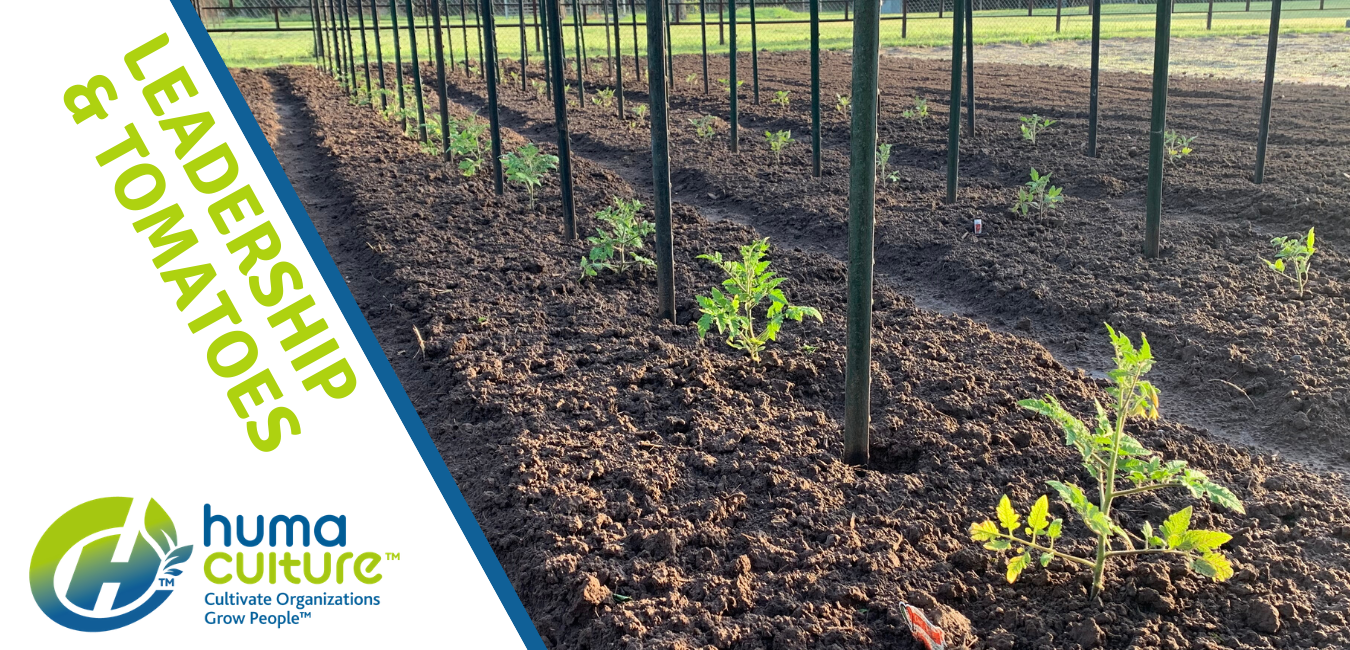
About 1 in 3 people aspire to a leadership role in business.1 About 1 in 3 people grow a kitchen garden.2 The motivation is the same with both demographics. What is it? The tomatoes, of course. Business success. The harvest.
In turn, successful businesses and successful gardens also have something in common: the people who are rooting (pun intended) for it all to be a thriving ecosystem, resulting in a bountiful harvest for everyone.
Over the years, I have observed that many horticulture principles can provide insights and understanding to help those in leadership build more successful organizations.
Leadership Principle #1 — First build the soil.
Without first building healthy soil, gardening is unlikely to be successful. Well-prepared, deep garden soil gives plants the best opportunity to grow a strong root system.

In my garden, I till the soil each spring while the temperatures are still dipping below freezing. I add compost, fall leaves, and grass clippings to add nutrients and texture to the soil. I add alkaline wood ash from winter fires to maintain the soil’s pH balance, since I know my iron-laden well water tends to acidify the soil over time.
Well-prepared soil ensures the plants have the nutrients they need. Good soil also maintains a more consistent temperature, and it allows excess water to drain away faster, retaining only a healthy amount of moisture and retaining it longer.
If we think of businesses and organizations as the soil in which we grow and earn our living, we can easily begin to see parallels between a garden and an organization. An organization that is well prepared has sufficient capitalization, delivers products and services consistent with its vision and mission, is conducive to employee health and well-being, has reserves to weather economic storms, etc.
Most new businesses fail because those who form them are focused primarily on the success they hope to achieve (i.e. harvesting a bumper crop of metaphorical tomatoes), rather than first focusing on the soil preparation that will be critical to that success.
Leadership Principle #2 — Support the plants as they grow.
Once the soil is prepared, the hardest work is done. I have created a nutrient-rich, foundational environment the tomato plants can send deep roots down into and draw resources from to thrive.
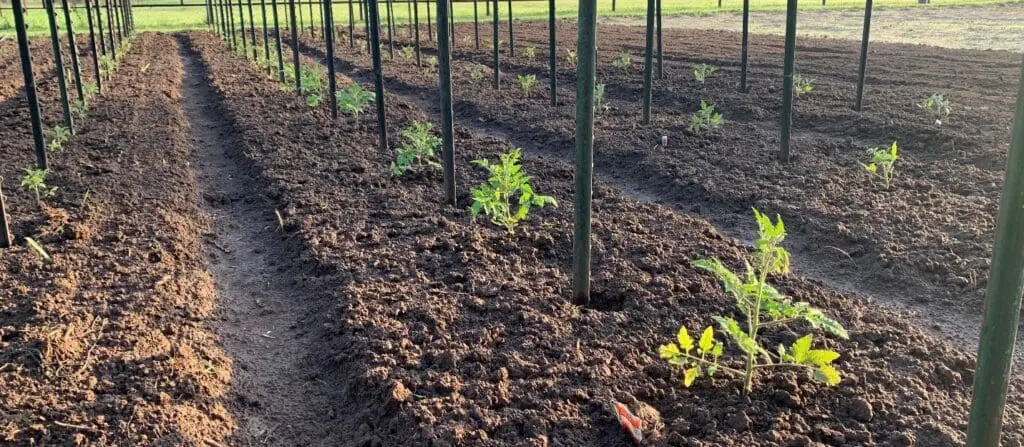
In addition to building the soil, I also have further resources to ensure the tomatoes’ success. I supply supports for the plants as they grow taller and bend under the weight of their fruit. I provide irrigation, giving plants the extra water they need in the dry summertime. I walk through the garden almost every day to identify stressors affecting the plants so I can intervene with extra support if necessary.
Employees—even those in the best-prepared organizational soils—will experience negative stressors and challenges from time to time. Distressed tomato plants, just like people experiencing excessive stress, will never be as productive as they would be if they were healthy, and the quality of what they produce will likely be lower as well. Like a horticulturist walking through the garden, a person in a leadership position needs to be able to recognize when something is preventing the employees within their span of care from fully thriving.
Perhaps the employee is not well-matched to the job; they might benefit from transplanting to another area of the organization. Perhaps some benefits, compensation, recognition and performance management programs, advancement pathways, etc. are not properly designed to align with the organizational vision or mission; more beneficial behavioral designs could be put in place instead. Perhaps there are organizational climate challenges; the team might need special support during especially trying times to overcome the difficulties and thrive.
Often, the problem lies not with the employee, but with the organization and whether it optimizes the availability of its resources so employees can effectively leverage them and thrive.
Leadership Principle #3 — Plants don’t exist for soil; soil exists for plants.
The primary focus of a successful garden is never actually the plants. Plants come and go. If they are happy and healthy in well-built soil, they will thrive and produce a great crop.
Yet I never think of my tomato plants as resources to be exploited. Rather, in partnership and anticipation, I provide them with great soil and support them as they grow and produce. Most of my effort is directed into building the soil for the plants and making sure they have everything they need to thrive; the plants themselves do the rest. Both my tomatoes and I work in this gardening venture, looking ahead to the reward – a bountiful harvest.
One of the most important lessons I have learned from gardening is that just as the plants do not exist for the soil, people do not exist for the organization. Employees—humans—are not “resources” or “capital.” In fact, these terms have come to bother me deeply. “Capital” and “resources” are things an organization owns, rents, or acquires through debt to produce a product or deliver a service. Grouping people into a category of owned or rented assets is very discomforting to the thoughtful person.
Further, I have observed that developing policies and practices based on the analogy of owning or renting people (as the capital/resources terminology implies) leads to confusion on many fronts. Ultimately, it often leads to employees who are demoralized and perform poorly.
So, what if we thought of businesses and organizations as soil created for people to grow and thrive in? What if we thought of the organization’s resources as the support people need to produce abundant value (the harvest)? Organizations do not own employees. Employees are not the resource. Organizations are the soil in which people can root themselves to do meaningful, fruitful work – to grow and to thrive.
Just like I build the soil for my tomato plants because they grow better in a prepared garden, people create organizations of all sorts because we grow better and accomplish more together.
Practical Applications
So, if we change the way we think about organizations and people, how do we also rethink the way leadership handles traditional “human resources” or “human capital” topics (e.g. pay, talent development, performance management, benefits, time off, total rewards, etc.)? In other words, what is the practical application of these principles?
The Humaculture® approach addresses this. In order to apply the concept of building the soil, we first have to ask some questions: Why does the organization exist? What is its vision? In what sort of climate does the organization operate?
After gaining some clarity about these factors, the Humaculture® approach leads us to consider which people will best achieve the organization’s vision and mission (peach trees are unhelpful if the goal is a tomato crop, just as nurses are unlikely to design the best engine for a cutting-edge vehicle prototype).
The Humaculture® approach also leads us to consider what structure and delivery of the organizational resources will allow the people—and, in return, the organization—to thrive and be abundantly fruitful.
It might seem like more work at the outset, but the tomatoes (the fruit, the value created) are always worth it.

1 http://press.careerbuilder.com/2014-09-09-Majority-of-Workers-Dont-Aspire-to-Leadership-Roles-Finds-New-CareerBuilder-survey
2 http://www.farmerfoodshare.org/farmer-foodshare/2017/6/15/gardening-boom-1-in-3-american-households-grow-food
Author:
Wes Rogers, Chief Guidance Officer for Humaculture, Inc. Wes has almost 35 years’ experience in consulting and senior management positions with a variety of organizations, facilitating groups of people with diverse perspectives and objectives to coalesce around a singular vision and marshal resources to achieve the vision. This experience provides exceptional insights into how organizations operate and succeed. Contact Wes at Wes.Rogers@humaculture.com.
Contributor:
Steve Cyboran, ASA, MAAA, FCA, CEBS, Chief Behavioral Officer, Consulting Actuary for Humaculture, Inc. Over the past 30 years, Steve has worked extensively with leading corporations, higher education institutions, and health systems across the country to articulate a vision for a healthy and effective workplace culture, develop a total rewards strategy to support that vision and brings deep benefits expertise with a behavioral approach and sound analytics to achieve and measure the desired outcomes. Contact Steve at Steve.Cyboran@humaculture.com.
Edited by:
Rachel Rogers, Editor for Humaculture, Inc. Rachel holds an A.A. in Liberal Studies with an emphasis in English and Communications. As a published writer with training in creative storytelling and corporate storytelling, her experience with writing, editing, and advising writers includes both technical and academic documents, as well as creative works.
About Humaculture, Inc.
Humaculture, Inc. transforms organizations—the way organizational leaders understand the organization and the relationships among the people in it, and the way people think about their position and role in the organization. Humaculture® is a philosophy and systematic approach for creating profitable, aligned, and healthy organizations conceptualized as “soil” in which people can thrive. Humaculture® helps organizations create the right culture in order to naturally attract, retain, sustain, grow, and transition people who enable the business—and each other—to thrive. More information can be found at: Humaculture.com.
Weathering the Storm: Is Your Organizational “Soil” Healthy Enough to Weather Both Floods and Droughts?

During these unprecedented times with businesses having been shut down due to an outside order by the government in response to COVID-19, many sectors of the economy, labeled as “non-essential,” were ordered to close business for a period. Organizations that are highly leveraged (a significant portion of the revenue is used to pay debt) or in lower margin businesses face an even greater challenge. Organizations need to figure out how to weather the storm. These options may include reduction in force to rolling furloughs, and potentially reorganizing through bankruptcy. What is the right decision for your organization?
If we think about an organization like the soil, the employees like plants growing in the organization, and the fruit they bear as the value or profit of the organization, then horticulture can provide a good analogy from which to view options for addressing the current situation. From a horticultural perspective, the current “storm” is like a drought. The first thing a horticulturist might do, for example, when faced with a drought is add mulch and preserve soil moisture, not jerk plants out of the garden. As another example, during an unexpected late freeze, it may become necessary to cover plants to enable them to maintain their heat.
“It is not nice to garden anywhere. Everywhere there are violent winds, startling once-per-five-centuries floods, unprecedented droughts, record-setting freezes, abusive and blasting heats never known before. There is no place, no garden, where these terrible things do not drive gardeners mad.” Henry Mitchell, author of the Essential Earthman
When weighing options to reduce costs and capacity such as layoffs, furloughs, rolling unpaid time off, treatment of unused PTO, leadership needs to weigh several considerations. For example,
Culture – One of the most important considerations may be how the organization wants to come out of this trying time. The approach may vary depending on the type of culture currently in place. For example:
- Strong, Productive Culture and Balance Sheet – If an organization has a strong, productive culture, with good talent and is financially strong enough to weather the current challenges (e.g., well prepared, fertile soil, that is more resilient), layoffs can be one of the most detrimental actions an organization can take to the long-term health of the organization and its people. There will be a drain on talent that may later be needed to support a strong recovery for the business, and that talent may wind up joining, or starting, competitors and taking a certain portion of knowledge with them. Layoffs made too hastily, where the remaining jobs aren’t redesigned to accommodate the reduction in staff and pick up the essential tasks of those leaving, may result in the need to rehire many of those positions. Then the organization assumes the cost of the layoff, and training of the new hires for the same positions, without any long-term value gain. In addition to considering the impact of the loss of talent from layoffs, the organization should budget for an increase in health, absence, and disability costs. We have seen 5% to 10% unanticipated increase in these costs depending upon the size and nature of the restructuring. The implications of a layoff may have long term impact that may make the long-term cost not worth the short-term gain. Other considerations may achieve the same goal while preserving the culture and health of the organization and its people.
- Culture is In Need of a Refresh – On the other hand, if there has been a need to rethink the culture and business structure (remove plants not well-suited for the garden, transplant some to different soil, and prune existing plants to shape them to be more productive), then it may make sense to consider some form of restructuring of the leadership and/or workforce. This can present a great opportunity to accomplish the organizational change that has been desperately needed but deferred. The type and nature of the restructuring may depend upon the suitability of the employees to achieve the business strategy. Organizational leaders should consider aspects of both cultural alignment and cultural health. A few examples (certainly not comprehensive) to consider may include:
- Working Retired – If there is a segment of the workforce at normal retirement age that may still be employed, but lack the energy and commitment necessary to take the organization where it needs to go. Then the organization may get more energy and innovation from a younger, less costly resource. In this case, an early retirement window may make sense. One client has a location where 70% of the workforce is retirement eligible and has the highest labor costs, but the employees are unprepared and afraid to retire. An early retirement window may be beneficial to those eligible for retirement and the organization.
- Strategically Misaligned – If there are certain businesses or shared service segments that may not be a good strategic fit (not directly driving the strategic priorities of the organization), then the organization may consider selling off, outsourcing, or co-sourcing those functions. For example, if your business is higher education, an outsourced food services contract affords greater flexibility during periods where the campus is shut down.
- Re-alignment – If there are opportunities to automate, streamline, or eliminate positions, then the organization may need to restructure. If the organization chooses this route, it is important that jobs are redesigned to ensure important functions don’t fall through the cracks, that you have the right talent in those positions, which may involve “transplanting” employees to other areas of the organization, and retraining or hiring different talent. Some of our clients have worked with a management consulting firm to evaluate staffing ratios to determine how many people should be appropriate. Following those recommendations, the client reduces staffing levels as indicated, but without redesigning the remaining jobs, they must often rehire those positions because critical work isn’t getting done.
Temporary Nature – Organizations will also need to consider if, and to what extent, this challenge will be a short term. If this will only be a temporary set-back and demand is simply deferred (e.g., delayed purchases such as iPhones, or elective procedures), or even if business will rebound to similar levels of activity from prior to the current downturn, then the organization may want to consider more of a shared responsibility approach with rolling unpaid time off or even furloughs. With the right messaging, the organization may be able to enhance its relationship with employees, letting them know the organization doesn’t want to let any of its teammates go during these challenging times, so we all need to consider ways to save money and share in the sacrifice. However, with 40% of the workforce living paycheck to paycheck[1], they may need to consider the potential impact on the financial well-being of the workforce if they are asked to work less (for example, 20% reduction in hours, and a corresponding 20% pay cut).
“My heightened awareness of stewardship to those within my span of care gave me a clear sense of purpose and clarity through which to view the situation. I thought to myself: We’re a family at Barry-Wehmiller so we need to act like one. What would a responsible family do in this crisis? A loving family would share the burden. Rather than watching a few of our colleagues face devastation, we decided that our reaction would be one of shared sacrifice.” Bob Chapman, CEO of Barry-Wehmiller
Other Cost Saving Opportunities – There are a number of dials in the various reward programs that can be considered. For example, time off programs can be leveraged to save cost and moderate the capacity of the workforce. The time off policies, and other state and local regulations, often drive a number of cost considerations, such as:
- Do you pay out unused PTO upon termination or at the end of the year?
- How does time accrue (e.g., front-load, weekly accruals)?
- To what level and extent should time accrue, or temporarily stop accruing during an economic downturn?
- What is the right level and balance between scheduled time off (PTO/vacation/holidays) vs. unscheduled time off (sick leave, disability, emergency)?
While there may be pressure to make rash decisions to lay people off for quick cost savings to preserve the profitability of the organization, take a step back and consider alternatives that may be similarly impactful, but preserve the “tilth” of the organization for the future.
Authors:
Steve Cyboran, ASA, MAAA, FCA, CEBS, Chief Behavioral Officer, Consulting Actuary for Humaculture, Inc. Over the past 30 years, Steve has worked extensively with leading corporations, higher education institutions, and health systems across the country to articulate a vision for a healthy and effective workplace culture, develop a total rewards strategy to support that vision and brings deep benefits expertise with a behavioral approach and sound analytics to achieve and measure the desired outcomes. Contact Steve at Steve.Cyboran@humaculture.com.
Wes Rogers, Chief Guidance Officer for Humaculture, Inc. Wes has almost 35 years’ experience in consulting and senior management positions with a variety of organizations, facilitating groups of people with diverse perspectives and objectives to coalesce around a singular vision and marshal resources to achieve the vision. This experience provides exceptional insights into how organizations operate and succeed. Contact Wes at Wes.Rogers@humaculture.com.
About Humaculture, Inc.
Humaculture, Inc. transforms organizations, the relationship with their people, and how they think about their people. Humaculture® is a philosophy of, and systematic approach to, creating profitable, aligned, and healthy organizations conceptualized as “soil” in which people can thrive. By creating the right culture, the organization naturally attracts, retains, sustains, grows, and transitions people who enable the business to thrive. More information can be found at: Humaculture.com.
[1]Research from the Federal Reserve found that 4 in 10 Americans couldn’t afford a $400 emergency, and 22% say they expect to forgo payments on some of their bills (https://www.marketwatch.com/story/half-of-americans-are-just-one-paycheck-away-from-financial-disaster-2019-05-16).


